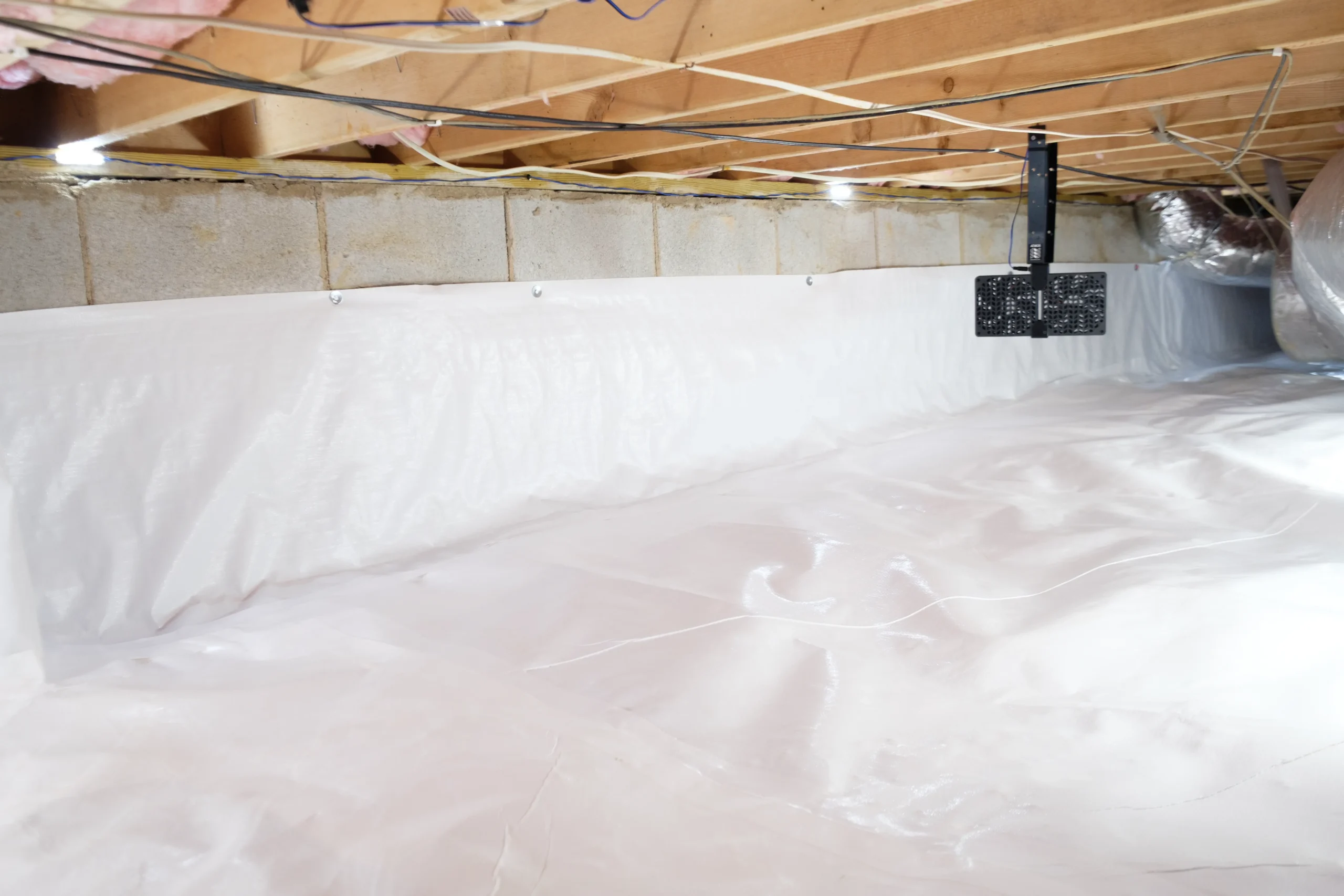
Controlling crawl space moisture first requires controlling how air enters and leaves the space. Open vents, foundation gaps, doors, penetrations, and other uncontrolled openings allow outside air to enter according to wind, pressure, and weather conditions rather than according to whether that air will improve the crawl space. Containing the crawl space establishes environmental control.
The important distinction is that containment does not necessarily mean the crawl space must remain permanently isolated from outside air. It means outside air should enter only when there is a reason to allow it and then the movement of the air is important as well. In order to control crawl space air, you first have to contain it.
Why Sealing Alone Does Not Control Crawl Space Moisture
Sealing a crawl space plays an important role in moisture management because it reduces uncontrolled air exchange with the outdoors. When vents and unnecessary openings are closed, outside air no longer enters the crawl space freely. This helps create more stable conditions and allows airflow decisions to be made intentionally.
However, moisture may still be present in the crawl space from:
- ground evaporation
- previous water intrusion
- humid air
- wet building materials
- plumbing leaks
- other moisture sources
However, sealing alone does not remove moisture. If that moisture is not dried, a sealed crawl space can still experience elevated humidity, condensation, or persistent damp conditions. Sealing should therefore be understood as a foundational control step rather than a complete drying strategy.
Why Air Control Matters in a Crawl Space
Air movement does not automatically reduce moisture. Uncontrolled airflow can bring additional moisture into a crawl space, redistribute moisture unevenly, or move moisture toward cooler surfaces where condensation is more likely. Environmental control makes it possible to determine whether airflow should occur rather than allowing airflow to occur continuously. When outside conditions support drying, air can be introduced intentionally. When outside conditions would add moisture, the crawl space can remain closed.
This creates more predictable moisture management conditions than relying on permanently open vents or uncontrolled air leakage.
Containment Does Not Mean Keeping the Crawl Space Closed All the Time
There is an important difference between containment and permanent closure. Containment establishes control over the crawl space. Once uncontrolled openings have been reduced, decisions about outside air can be based on measured conditions instead of allowing weather and pressure changes to determine when ventilation occurs. Outdoor air is effective for drying. However, at times, outdoor air may contain more moisture than the crawl space and should be kept outside.
The purpose of containment is therefore not simply to close the crawl space. The purpose is to create an environment where air can be managed intentionally.
Containment Creates the Conditions for Moisture Control
A controlled crawl space makes it possible to coordinate several moisture management functions.
Once uncontrolled air entry is limited, a system can determine:
- when outside air can support drying
- when the crawl space should remain closed
- when dehumidification is needed
- how air should be circulated throughout the crawl space
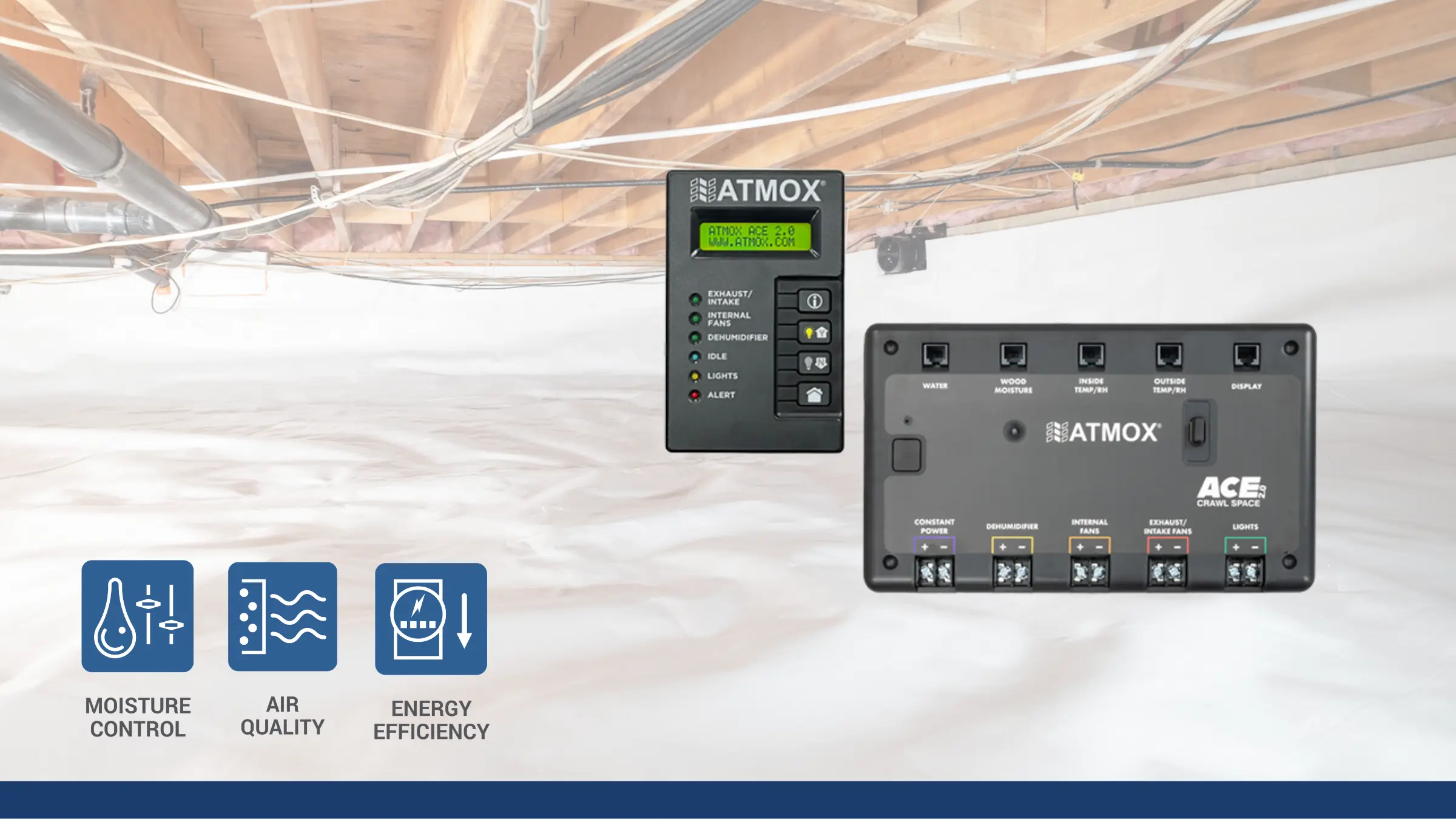
Containment establishes control of the environment. The moisture control strategy determines how that controlled environment should respond.
Frequently Asked Questions
Is encapsulation enough to control crawl space moisture?
Encapsulation or sealing can significantly reduce uncontrolled outside air and ground moisture, but it does not remove moisture in the crawl space. A drying strategy is still necessary.
Why does a crawl space need to be closed sometimes?
A crawl space should remain closed when outside air would increase the moisture load. Warm, humid outdoor air can raise moisture levels when introduced into a cooler crawl space.
Does containing a crawl space mean it can never be ventilated?
No. Containment allows ventilation to become intentional rather than uncontrolled. Outside air can be introduced when environmental conditions indicate that it can support drying.
What is the difference between containment and controlled ventilation?
Containment establishes control over uncontrolled air entry. Controlled or intelligent ventilation uses that control to determine when outside air should or should not enter the crawl space.