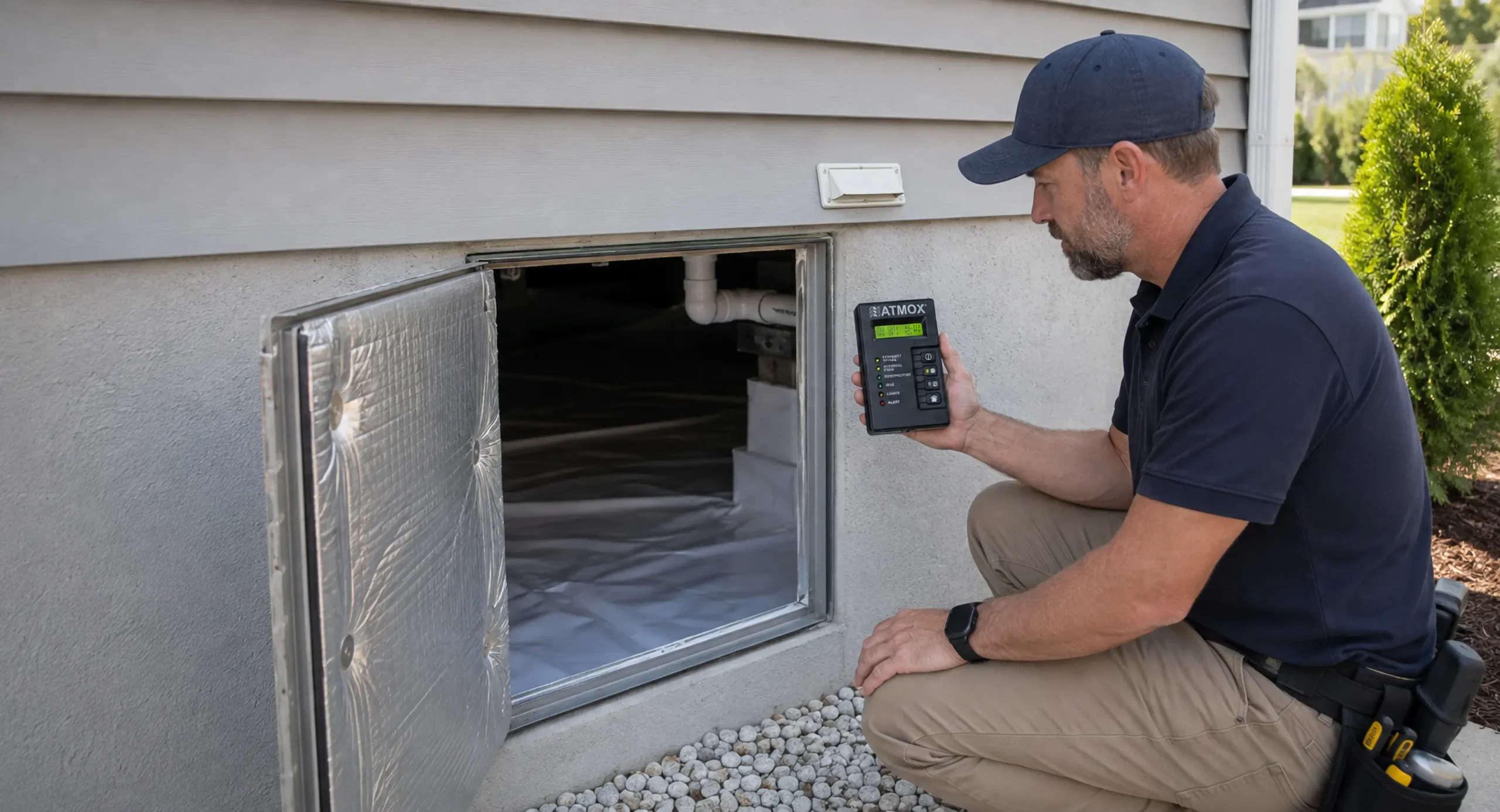
Crawl space moisture control requires more than choosing one solution such as encapsulation, ventilation, or dehumidification. Moisture enters and moves through a crawl space in different ways, and conditions change with outdoor weather, ground moisture, temperature, and air movement.
A complete crawl space moisture control strategy begins by addressing water sources and ground moisture, then establishing control of the crawl space environment. From there, ventilation, dehumidification, and circulation can be used according to the conditions within and outside the crawl space.
The goal is not simply to seal a crawl space or move air through it. The goal is to control when air enters, when it remains outside, how moisture is reduced, and how drying conditions are distributed throughout the space.
Why Crawl Space Moisture Control Is Often Misunderstood
Crawl space moisture control is often presented as a choice between encapsulation and ventilation, or between ventilation and dehumidification. That framing is incomplete because each method performs a different function.
Moisture responds to air movement, temperature differences, pressure relationships, and the amount of water vapor present in the air. When those conditions are not managed intentionally, moisture problems can remain even after a crawl space has been sealed or drying equipment has been installed.
Crawl spaces are also not static environments. They are affected continuously by outdoor weather, seasonal changes, ground moisture, and temperature differences between the crawl space and the outside air.
Because of these changing conditions, the more useful questions are:
- When should outside air be allowed into the crawl space?
- When should outside air be kept out?
- What is your drying action?
- How should air be moved so that drying conditions reach the entire crawl space?
Encapsulation, ventilation, circulation, and dehumidification each address part of the moisture-control process. The key is using each method for the function it performs.
Putting Crawl Space Moisture Control in the Correct Order
Successful crawl space moisture control depends on addressing problems in the proper sequence. Adding drying equipment before correcting a water problem, for example, does not eliminate the source of the moisture.
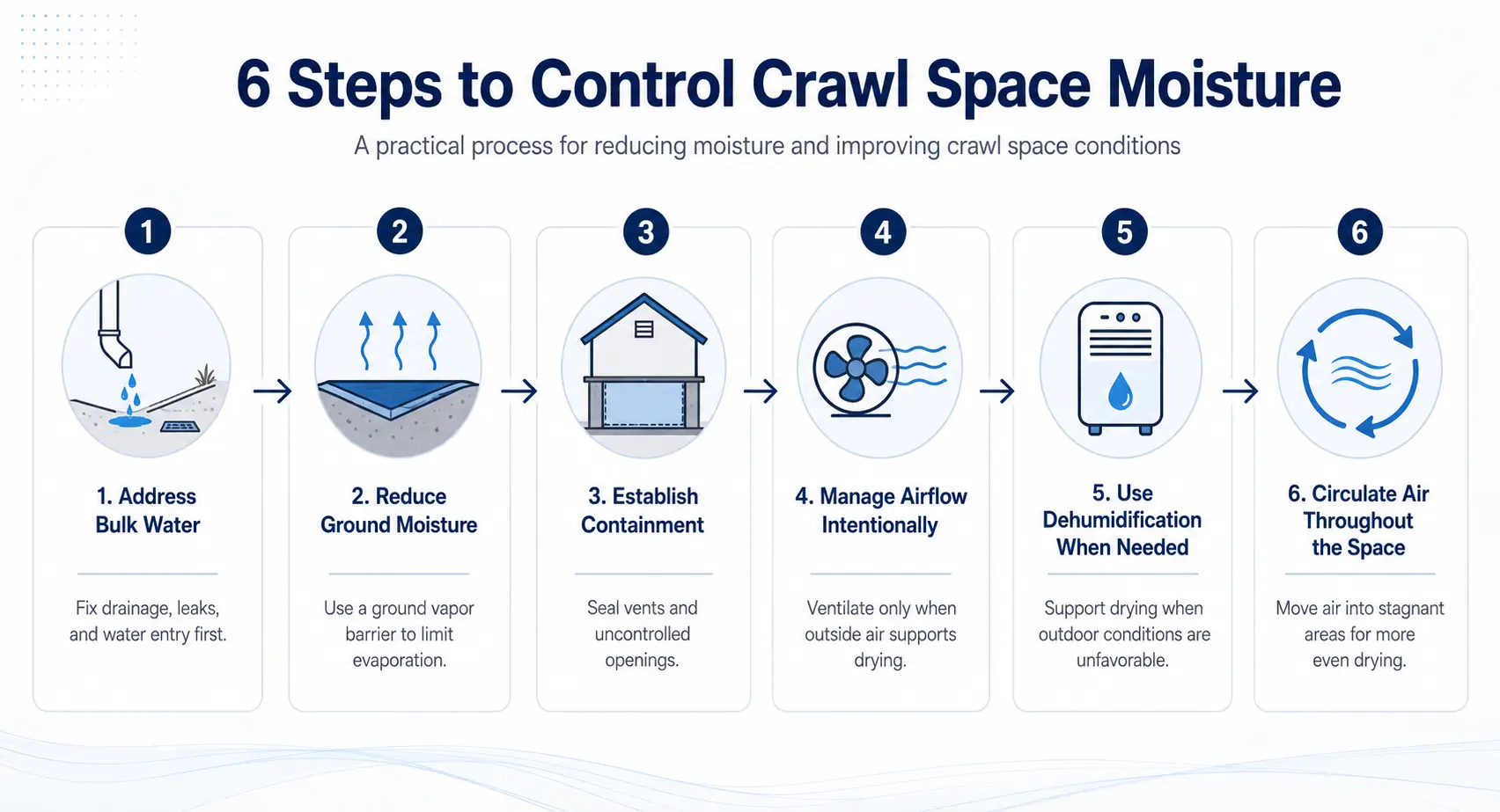
1. Address Bulk Water Issues
Exterior drainage, grading, plumbing leaks, foundation openings, and other sources of liquid water should be corrected first. Bulk water creates an ongoing moisture load as that water evaporates into the crawl space air.
2. Reduce Ground Moisture
Moisture naturally evaporates from exposed soil. A ground vapor barrier helps limit this source of water vapor and reduces the amount of ground moisture entering the crawl space air.
3. Establish Control of the Crawl Space
Unused vents and uncontrolled openings should be sealed so outside air cannot freely enter the crawl space. Containment creates an environment in which air movement can be managed intentionally instead of being determined by open vents, leaks, and changing conditions.
4. Manage Airflow Intentionally
Outside air is a highly effective and efficient source of drying a crawl space. However, it can sometimes help dry a crawl space and sometimes add moisture to it. Ventilation should therefore occur only when measured outdoor conditions indicate that outside air can support drying. When outside air would add moisture, the crawl space should remain closed.
5. Support Drying With Dehumidification When Needed
When outdoor conditions are not favorable for ventilation, dehumidification can help maintain moisture stability inside the crawl space. A dehumidifier is an important drying tool, but it has limitations such as its limited drying reach.
6. Circulate Air Throughout the Crawl Space
Crawl spaces contain piers, ductwork, insulation, narrow areas, and other obstructions that can restrict airflow. Intentional circulation helps distribute drying conditions into areas where air might otherwise remain stagnant.
The Four Functions of a Complete Crawl Space Moisture Strategy
Once bulk water and ground moisture have been addressed, crawl space moisture management can be viewed as four separate but connected functions.
- Containment – Containment limits uncontrolled air entry and creates an environment that can be managed.
- Controlled Ventilation – Controlled ventilation allows outside air into the crawl space only when measured conditions indicate that the air can support drying.
- Dehumidification – Dehumidification removes moisture from enclosed crawl space air when outdoor conditions are not beneficial for ventilation.
- Circulation – Circulation moves air throughout the crawl space so improved drying conditions reach areas that might otherwise remain stagnant.
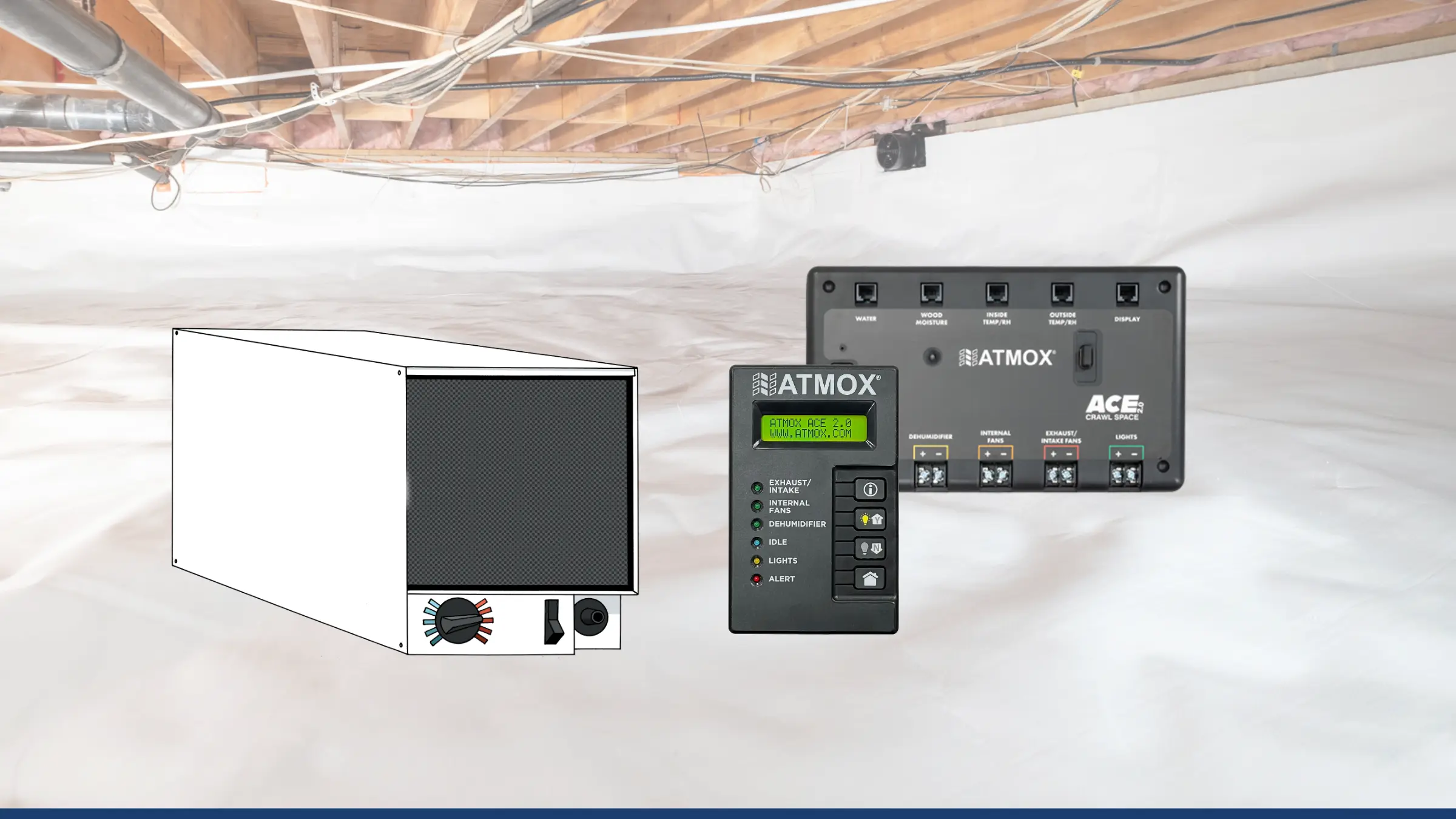
Rather than relying on one method in isolation, crawl space moisture control works by addressing the source of moisture and then managing containment, drying, and air movement according to changing environmental conditions.
Frequently Asked Questions
What should be addressed first in a wet crawl space?
Bulk water problems should be addressed first. Drainage problems, plumbing leaks, foundation water entry, and other sources of liquid water must be corrected before a moisture-control strategy can work effectively.
Is sealing a crawl space enough to control moisture?
No. Sealing helps establish control by reducing uncontrolled outside air entry, but sealing does not remove moisture in the crawl space.
Does every crawl space need the same moisture control solution?
Crawl spaces vary in construction, moisture sources, airflow, climate, and environmental conditions. Moisture control should be based on the conditions affecting the individual crawl space rather than relying on one fixed solution.