
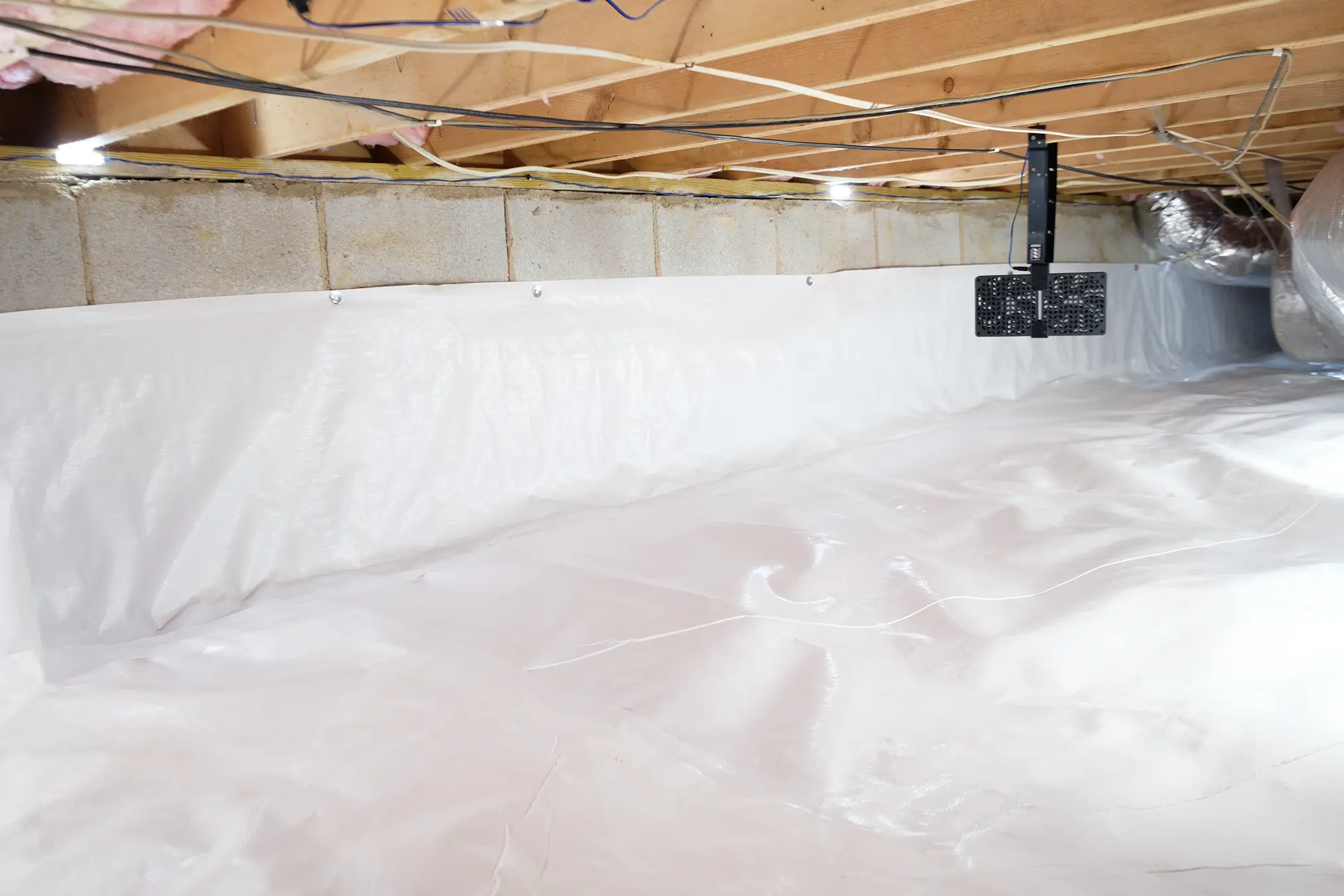
What causes high crawl space humidity? High crawl space humidity is usually not caused by one isolated problem. It often develops over time and through a combination of water intrusion, moisture evaporating from the ground, humid outdoor air, plumbing or condensate leaks, uncontrolled air openings, and inadequate air movement within the crawl space.
Correcting the problem requires more than installing a single fan, vapor barrier, or dehumidifier. The source of the moisture must first be identified. Bulk water and drainage problems should be addressed before selecting a system to manage humidity and provide ongoing drying.
A recent crawl space restoration in Charlotte, North Carolina, demonstrates how these conditions can overlap in an older home and why the sequence of the work matters.
How Do You Reduce High Crawl Space Humidity?
An effective crawl space moisture-control plan generally includes:
- Stop rainwater, groundwater, plumbing leaks, and condensate from entering the crawl space.
- Cover exposed soil with a properly sealed ground vapor barrier.
- Seal unnecessary foundation and utility penetrations.
- Establish a reliable drying strategy using controlled ventilation and dehumidification, when needed in certain regions.
- Circulate air throughout the entire crawl space, including areas obstructed by ductwork and foundation walls.
- Monitor humidity, temperature, dew point, and wood moisture over time.
The Charlotte project included each of these elements because no individual component could address all of the conditions found beneath the home.
Charlotte, NC Case Study
The home was located in Charlotte, North Carolina. It was approximately 50 years old and had a crawl space measuring more than 2,000 square feet.
As is common in older homes, the crawl space reflected decades of repairs, renovations, and utility changes. It contained deteriorated insulation, abandoned wiring, plumbing and cable penetrations, extensive HVAC ductwork, and sections with limited clearance.
Portions of the crawl space floor were approximately six to eight inches below the surrounding exterior grade. This increased the importance of controlling water around the foundation.
Large sections of ductwork also divided the crawl space into separate areas. Even after the visible moisture sources were corrected, these obstructions would make it difficult for air from one fan or dehumidifier to reach the entire space.
The project therefore had to address four separate but related concerns:
- Bulk water entering near the foundation
- Water vapor rising from the soil
- Uncontrolled air and utility openings
- Uneven drying and circulation throughout the crawl space
Why Was the Crawl Space Humidity So High?
The moisture problem did not have one single cause.
Changes to the property over time, including remodeling and the installation of a rear deck, had affected how rainwater moved around the foundation. Water was entering near the rear of the house, but the deck made a conventional exterior drainage repair difficult.
The below-grade portions of the crawl space were also more vulnerable to water accumulation during periods of heavy rain.
Exposed soil and gaps in the existing ground covering allowed moisture from the earth to enter the crawl space as water vapor. At the same time, numerous foundation penetrations allowed uncontrolled air to move through the space.
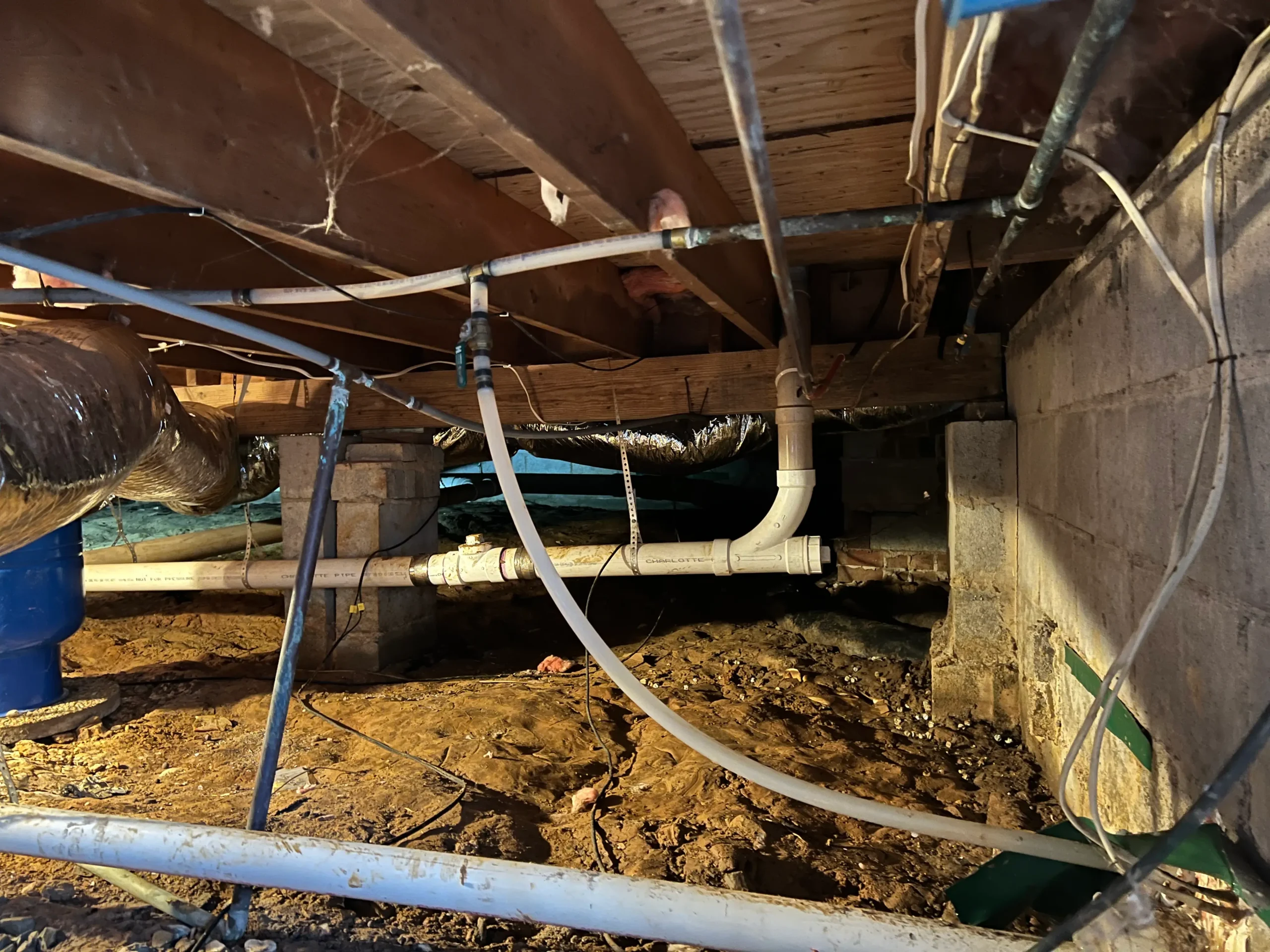
Finally, the large HVAC ducts restricted internal airflow. Some sections of the crawl space could remain damp even when conditions closer to a fan or dehumidifier appeared acceptable.
This is an important point for both homeowners and installers. A crawl space should be evaluated as an entire environment. A reading taken in one accessible location may not represent the conditions behind ductwork, near a foundation wall, or in a low section of the crawl space.
Removing Failed Materials and Inspecting the Structure
The restoration began with the removal of the deteriorated decades old fiberglass insulation and accumulated debris.
Removing these materials exposed the wood joists and made it possible to inspect the wood more thoroughly. It also provided access to areas that would later need to be cleaned, sealed, and incorporated into the moisture-control system.
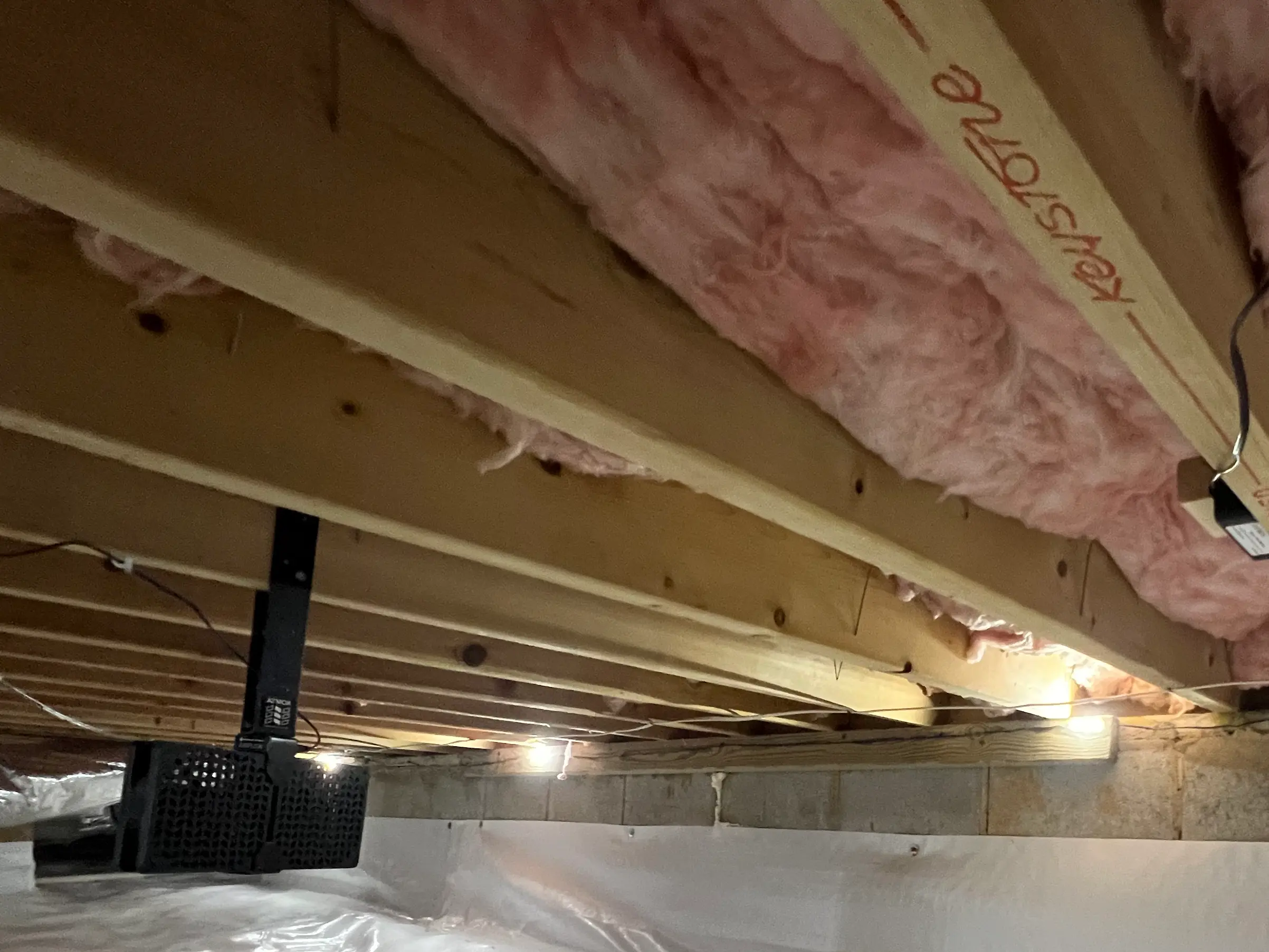
Organic staining was present on portions of the wood framing. The wood was cleaned using a two-step wood-cleaning process.
Cleaning the wood does not correct the source of a moisture problem. It must be paired with drainage, ground-moisture control, and an effective drying plan. In this project, the cleaning was performed after the crawl space had been opened for inspection and as part of the larger restoration process.
New R-19 fiberglass insulation was installed where specified to replace the failed insulation.
Addressing Water Before Humidity
Before trying to lower the crawl space humidity, the project team first addressed the active water intrusion.
An interior perimeter drain was installed along the rear foundation wall. The drain was connected to an existing drainage system so that water entering near the back of the home could be captured and expelled from the crawl space.
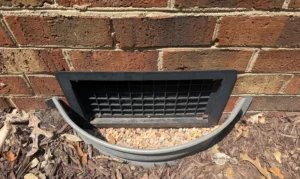
Vent wells were also installed along the front foundation. Foundation vents and other openings located too close to exterior grade can become entry points for runoff. Vent wells provide clearance around the openings and help keep surface water from flowing directly into the crawl space.
This drainage work was essential. A dehumidifier can remove water vapor from the air, but it cannot compensate for water intrusion that continues to enter beneath the home. Likewise, a vapor barrier can reduce moisture entering from the soil, but it cannot correct water flow.
Sealing
Over the life of the home, openings had been made for electrical wiring, plumbing, telephone service, cable, and other utilities. Some utilities were still in use. Others openings remained after the original wiring or service had been abandoned.
These openings created uncontrolled pathways for air, insects, and rodents. Abandoned materials were removed where appropriate, and the remaining gaps were sealed.
Air sealing helps create more predictable conditions inside the crawl space. It also allows the moisture-control equipment to operate as part of a designed system rather than continually responding to random air leakage.
Installing the Crawl Space Vapor Barrier
A heavy-duty 16-mil material was installed across the crawl space floor. A 12-mil material was installed on the foundation walls.
The heavier and woven floor material was selected because the crawl space had low-clearance sections and a gravel surface in areas. Service technicians entering the space would need to crawl directly across the barrier, making puncture and tear resistance especially important.
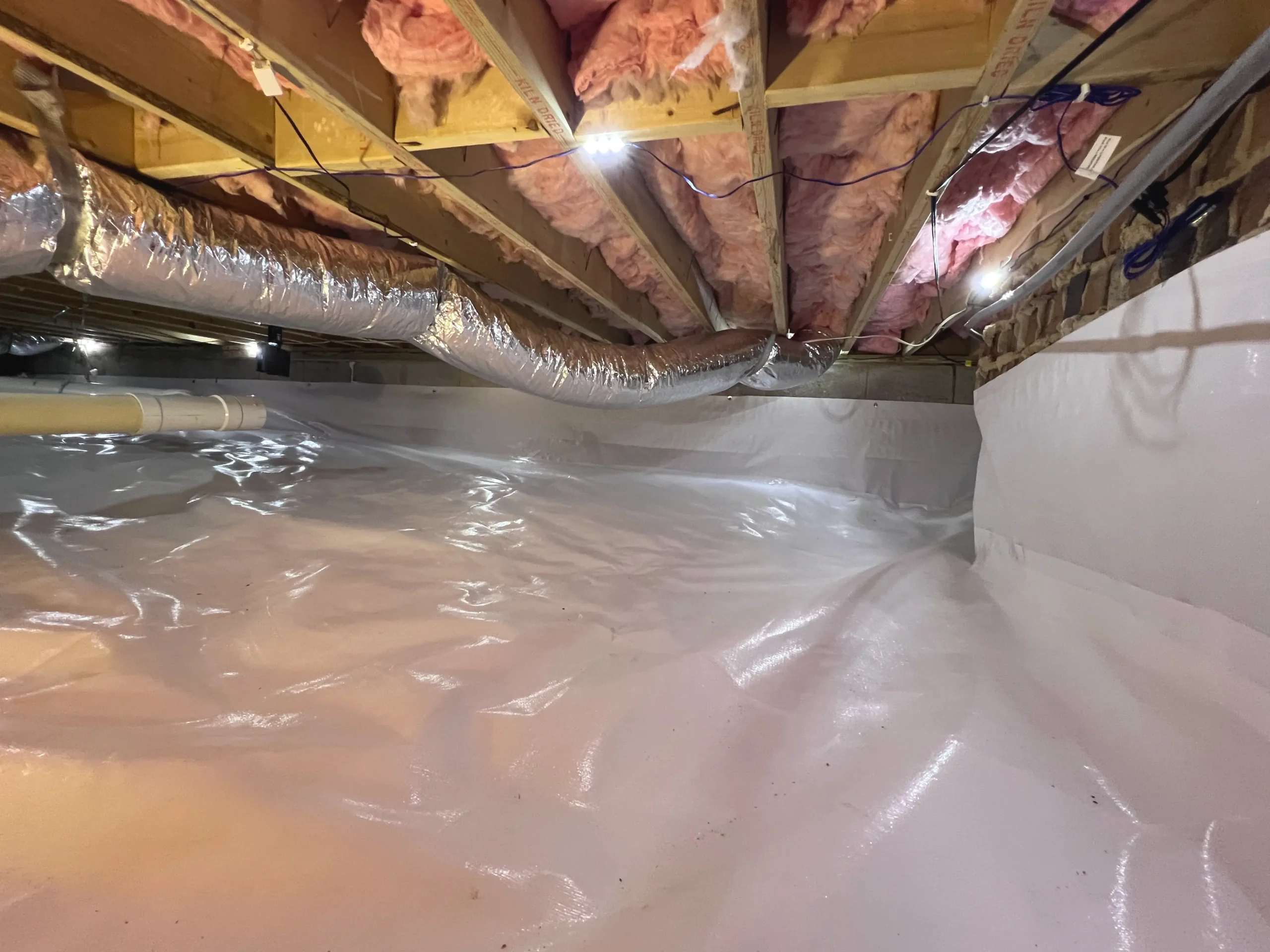
The vapor barrier was extended around piers and structural components, secured where required, and sealed at the seams.
The quality of a vapor-barrier installation depends on more than the thickness printed on the material. The puncture resistance, low permeance, and grade of resin all affect durability, appearance and odors from off-gassing. Open seams, poorly detailed piers, exposed soil, and unsealed penetrations can continue to allow significant ground moisture into the crawl space.
The completed installation provided a continuous separation between the exposed earth and the crawl space environment. Its bright light-colored surface also made the crawl space easier to inspect and service.
Will Encapsulation Alone Fix High Crawl Space Humidity?
Encapsulation is an important part of many crawl space moisture-control projects, but it does not resolve every moisture problem. There still needs to be an effective drying action.
A vapor barrier reduces moisture entering from the ground. Sealing foundation openings reduces uncontrolled outdoor-air entry. Neither step removes active water, repairs a plumbing leak, distributes dry air around large obstructions, or guarantees that the crawl space has an effective means of drying.
A closed or encapsulated crawl space may still experience high humidity when:
- Water continues to enter around the foundation
- Drainage beneath the barrier is inadequate
- Plumbing or HVAC condensate is leaking
- The vapor barrier has gaps or exposed areas
- Air cannot move around ductwork or foundation walls
- The drying equipment is improperly sized or positioned
- The space has no coordinated ventilation or dehumidification strategy
For this Charlotte home, the vapor barrier was one component of a larger moisture-management system.
Using Intelligent Ventilation When Outdoor Air is Beneficial
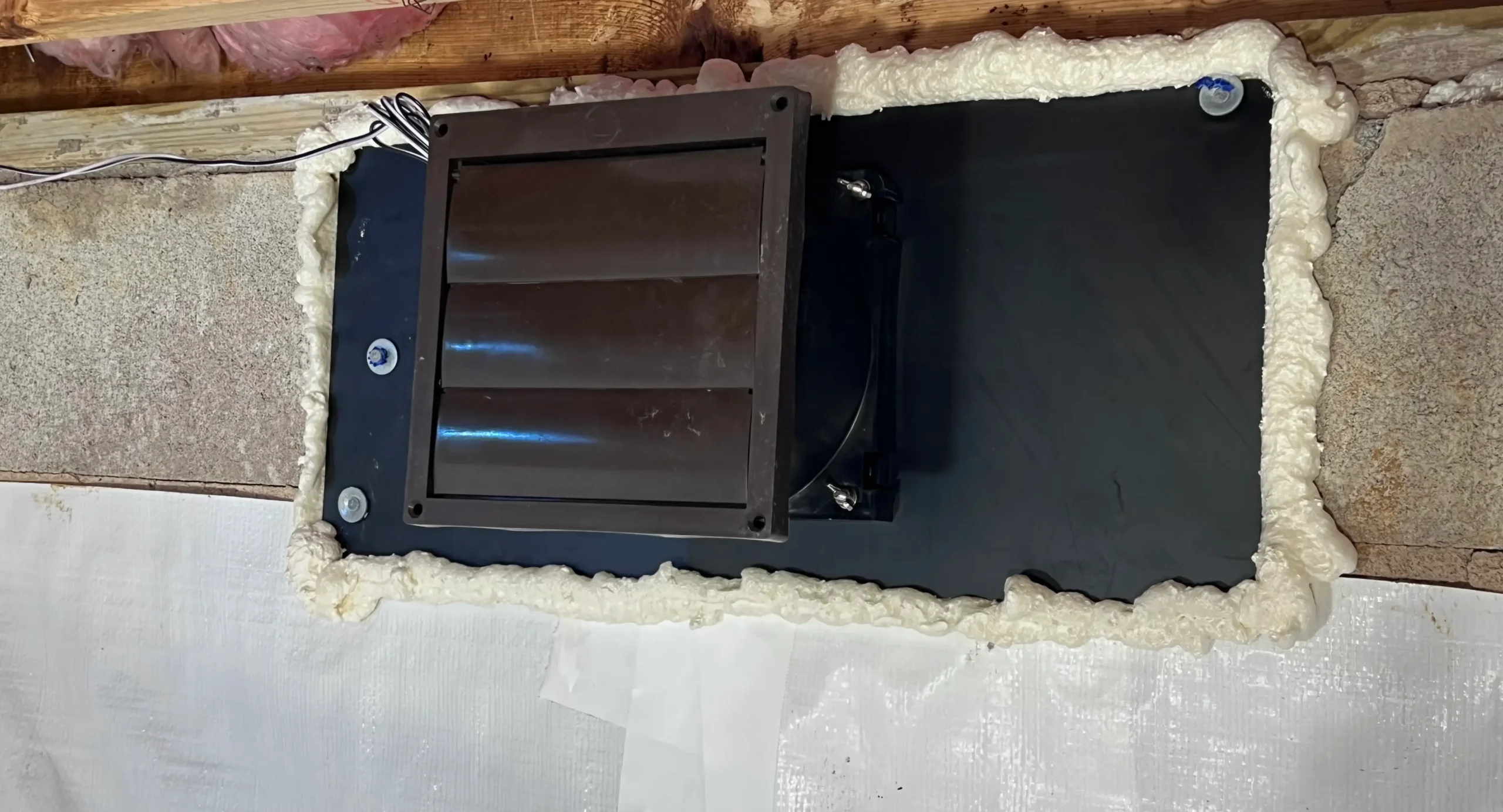
Two intake fans and two exhaust fans were installed as part of the ATMOX system.
The fans were mounted on louvered openings that remain closed when the fans are not operating. This helps limit uncontrolled outdoor-air entry when exterior conditions are not beneficial.
Outdoor air is not automatically dry simply because it feels cooler or because the relative humidity reading appears lower. Temperature affects how much moisture air can hold, so dew point must also be considered.

The ATMOX controller compares conditions inside and outside the crawl space. Ventilation operates when the outside air has greater drying ability. When outdoor conditions would add moisture, the ventilation openings remain closed.
This is different from operating crawl space fans continuously or controlling them only with a basic humidistat. In Charlotte’s humid summer climate, uncontrolled ventilation can introduce additional moisture when the outdoor dew point is higher than the conditions inside the crawl space.
Improving Air Movement Around Ductwork
The extensive HVAC ductwork created several potential areas of stagnant air.
Internal ATMOX circulation fans were placed in selected locations to move air through and around these obstructions. These fans do not bring outdoor air into the crawl space. Their purpose is to improve air distribution within the space.
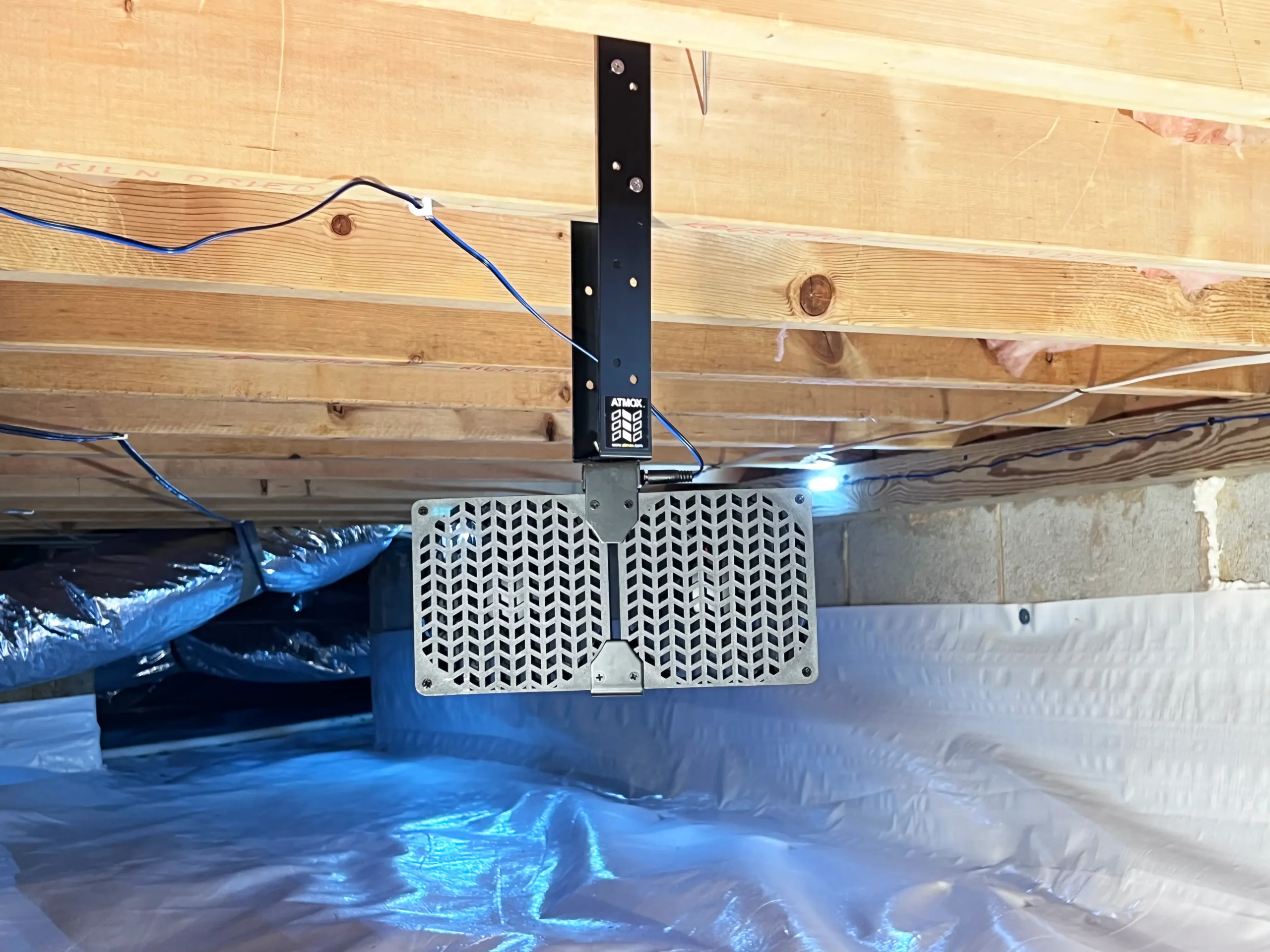
This allows drying from controlled ventilation or dehumidification to reach areas farther away from the primary equipment.
Air circulation is particularly important in large crawl spaces. A dehumidifier may maintain acceptable conditions in the area immediately surrounding the unit while distant corners or sections divided by ductwork remain considerably more humid.
For this reason, equipment placement should be based on the actual geometry of the crawl space rather than square footage alone.
Integrating Supplemental Dehumidification
A dehumidifier was installed to provide supplemental drying during periods when outdoor air was not suitable for ventilation.
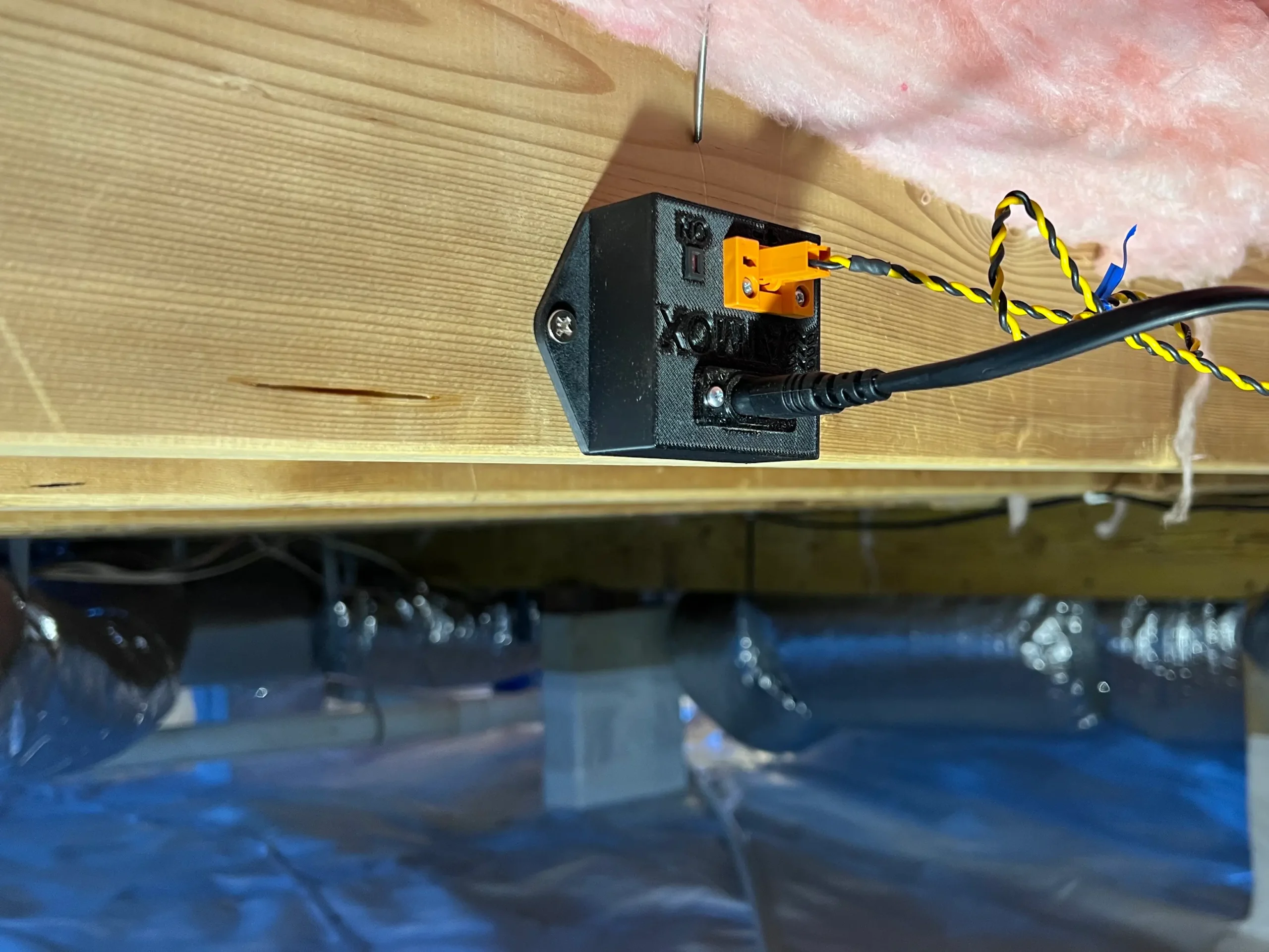
The dehumidifier was integrated with the ATMOX controller. This allowed the system to select the drying method according to the conditions:
- Controlled ventilation when outside air offered useful drying
- Dehumidification when outdoor conditions were unfavorable and additional moisture removal was needed
- Internal circulation to distribute the drying effect throughout the crawl space
A condensate pump was installed to carry the collected water from the dehumidifier safely outside.
Ventilation and dehumidification do not have to be treated as opposing approaches. In a properly designed system, each can be used when it is most beneficial.
Monitoring More Than a Single Humidity Reading
The ATMOX display was installed in the garage. This allowed the homeowner to review system conditions and operation without entering the low-clearance crawl space.
A single relative-humidity reading does not always provide enough information to evaluate crawl space moisture. Relative humidity changes with temperature. A more complete evaluation may include:
- Relative humidity
- Temperature
- Dew point
- Wood moisture content
- The length of time elevated conditions persist
- Differences between multiple areas of the crawl space
Wood moisture is particularly useful because it indicates how the framing has responded to the surrounding conditions over time.
Monitoring also helps homeowners and installers observe how the crawl space responds after heavy rain, during humid summer weather, and as seasonal conditions change.
Improving Access With Permanent Lighting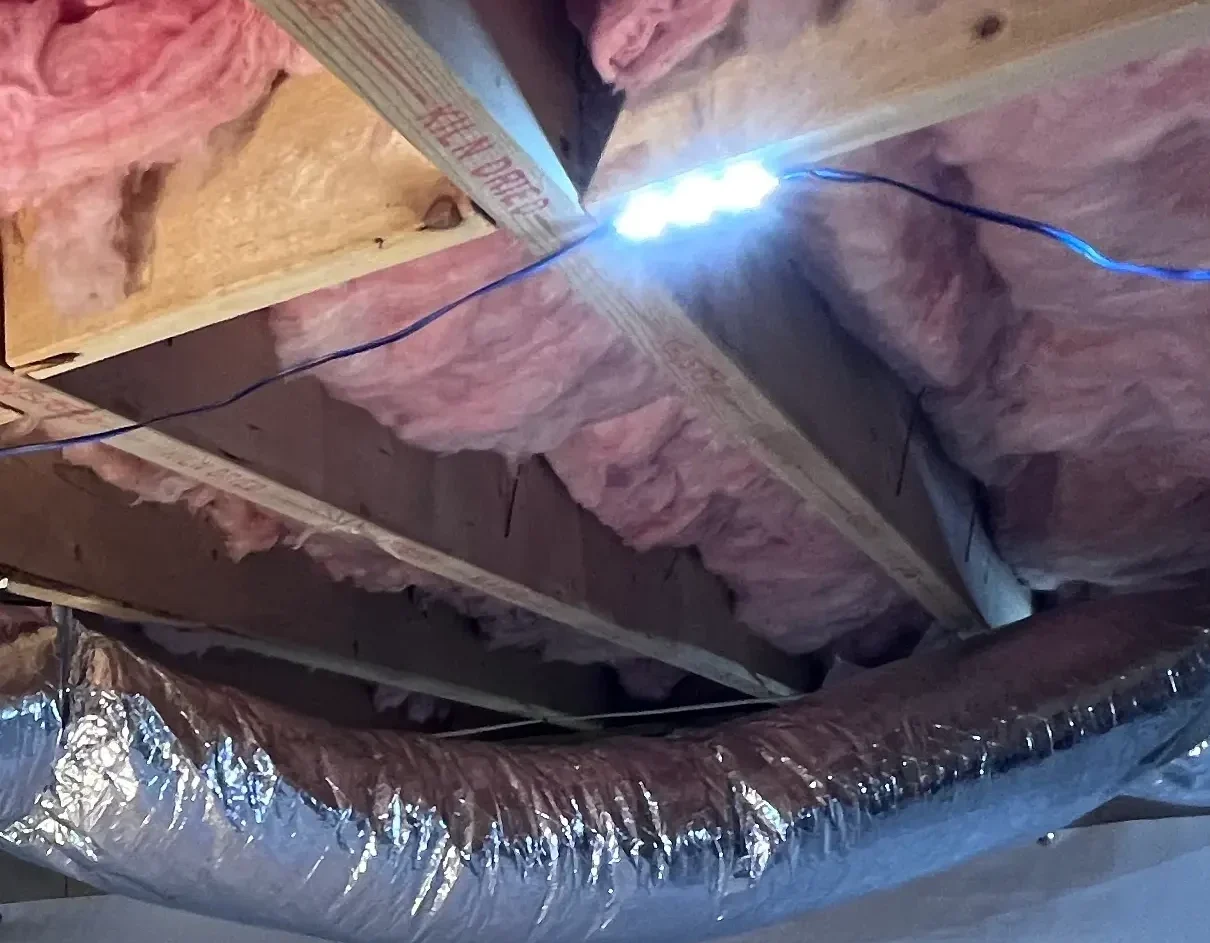
ATMOX LED lighting was installed along the perimeter and center joists. The lighting improves the long-term serviceability of the crawl space. Good lighting makes it easier to inspect the drainage system, plumbing, ductwork, vapor-barrier seams, framing, and installed equipment. In a crawl space of more than 2,000 square feet, lighting also makes future maintenance more practical than relying entirely on portable work lights.
The Completed Moisture-Control System
The completed Charlotte crawl space restoration included:
- Removal of failed insulation and accumulated debris
- Cleaning of the exposed wood framing
- Installation of new R-19 fiberglass insulation where specified
- An interior perimeter drainage system
- Custom foundation vent wells
- Sealing of abandoned and active utility penetrations
- A reinforced ground and wall vapor barrier
- Controlled exhaust and intake fans
- Internal circulation fans
- Integrated dehumidifier
- Condensate management
- Remote monitoring from the garage
- Permanent crawl space lighting
The drainage system addressed bulk water. The vapor barrier reduced moisture entering from the soil. Air sealing reduced uncontrolled openings. Controlled ventilation used the drying power of outside air when conditions were beneficial. The dehumidifier provided supplemental moisture removal, while the internal fans distributed air through the obstructed crawl space.
The result was a cleaner, more accessible, and more consistently managed environment beneath a 50-year-old Charlotte home.
Frequently Asked Questions About Crawl Space Humidity
What causes high humidity in a crawl space?
Common causes include rainwater or groundwater intrusion, exposed soil, gaps in the vapor barrier, plumbing leaks, HVAC condensate, humid outdoor air, foundation openings, and poor circulation. Many crawl spaces have more than one moisture source.
Learn more: How to Control Crawl Space Moisture
What should be corrected first in a wet crawl space?
Active water intrusion should be addressed first. This may include gutters, downspouts, grading, exterior drainage, interior drains, plumbing leaks, condensate drains, or foundation openings. Moisture-control equipment should not be expected to compensate for an ongoing water problem.
Learn more: Water Intrusion vs. Moisture
Will a vapor barrier lower crawl space humidity?
A properly installed vapor barrier can substantially reduce moisture entering from the soil. It will not remove standing water, stop plumbing leaks, or provide the drying action needed in every crawl space.
Learn more: Encapsulation vs. Ventilation: Is It Really One or the Other?
Should crawl space vents be open or closed during the summer?
The answer depends on the moisture content of the outside air, not simply the season or outdoor relative humidity. In a humid climate, open vents can add moisture when the outdoor dew point is high. ATMOX systems control ventilation and only operates the intake and exhaust fans when outside air can improve crawl space conditions.
Learn more: Should crawl space vents be open or closed?
Will a dehumidifier solve a crawl space moisture problem?
A dehumidifier can be an effective drying tool, but it should be part of a larger moisture-control plan. Drainage, ground vapor, air leakage, condensate management, equipment placement, and internal circulation should also be evaluated.
Learn more: How ATMOX Makes Your Dehumidifier More Effective
Why is one area of my crawl space still damp?
Ductwork, foundation walls, additions, piers, and changes in elevation can restrict air movement. A humidity reading near the dehumidifier may not represent conditions in a distant or obstructed section. Multiple sensors and properly placed circulation fans can help address these differences.
Learn more: Why Some Crawl Space Areas Stay Damp
What measurements should an installer take?
An installer or homeowner should inspect for visible water and evaluate relative humidity, temperature, and wood moisture content in more than one area. Conditions should also be considered over time rather than relying entirely on one reading taken during one visit. However, there are signs when moisture has been present for some time.
Learn more: Crawl Space Inspection
Have Similar Conditions in Your Crawl Space?
Every crawl space is different. Water instrusion, ground moisture, air movement, humidity and the layout of the space should all be considered when evaluating your crawl space. Get connected with an installer to help you determine your crawl space needs.
Project Overview
Location: Charlotte, North Carolina
Home Age: Approximately 50 years
Crawl Space Size: More than 2,000 square feet
Primary Systems and Materials: ATMOX, Aprilaire, Viper CS Vapor Barrier, Enviroguard
