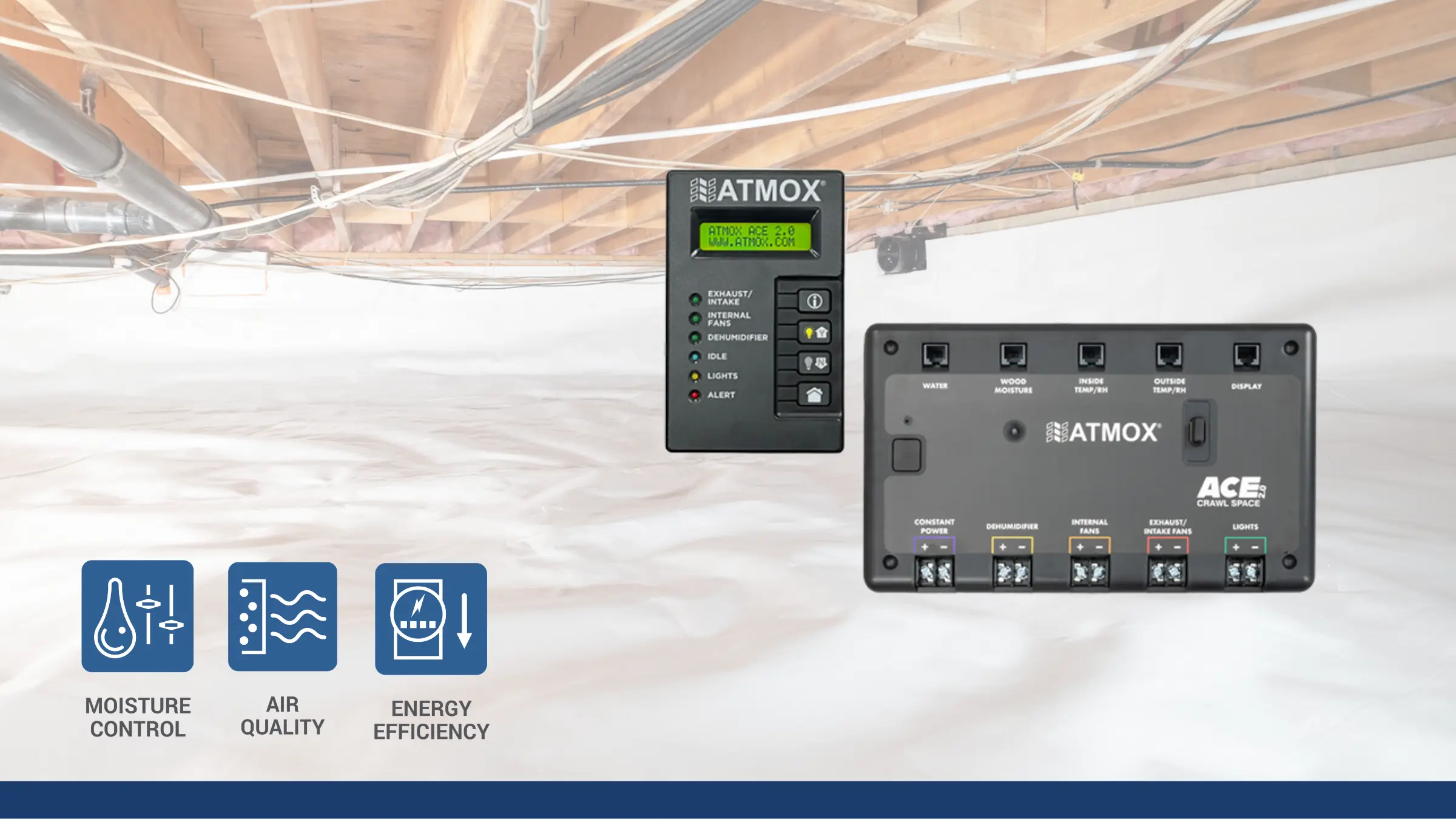
A complete crawl space moisture control system can combine containment, measured ventilation, air circulation, and dehumidification to respond to changing environmental conditions. The crawl space is first contained so outside air cannot enter freely through uncontrolled vents and openings. Indoor and outdoor temperature and humidity conditions can then be monitored to determine when outside air may support drying and when introducing outside air could add moisture. When outdoor conditions are favorable, intelligent ventilation can be used. When outdoor conditions are unfavorable, the crawl space remains closed and dehumidification can provide supportive drying when needed. Circulation helps distribute those drying conditions throughout the crawl space.
The result is a moisture control approach based on measured conditions instead of relying on permanently open vents, permanent closure, or one drying method alone. However, those measured conditions must be measured for inside and outside the crawl space. The dew point is vital in knowing whether the outside air is beneficial for the crawl space. Intelligent ventilation knows that humidity is relative to temperature. Therefore, an intelligent moisture control system is going to measure indoor and outdoor temperature, relative humidity and dew point. These measurements and calculation allow the intelligent system to determine the proper method or tool to control the moisture within the crawl space. The system will determine whether to ventilate, dehumidify and when internal circulations fans should be running.
Why Passive Ventilation Does Not Reliably Control Crawl Space Moisture
Traditional passive crawl space ventilation allows outdoor air to enter through foundation vents without determining whether that air will improve or worsen moisture conditions. Sometimes outside air can help reduce moisture. At other times, particularly when warm humid air enters a cooler crawl space, ventilation can increase moisture levels and create conditions that support condensation.
Passive ventilation cannot evaluate:
- indoor temperature
- outdoor temperature
- indoor humidity
- outdoor humidity
- dew point relationships
It also provides no mechanism for intentionally closing the crawl space when outside conditions are unfavorable. For ventilation to be a reliable moisture management tool, airflow must be based on environmental conditions rather than simply being present all the time.
Why Ventilation Must Be Conditional to Be Effective
Outdoor conditions change from hour to hour, day to day, and season to season. Ventilation that helps dry a crawl space during one set of conditions may add moisture during another.
Effective ventilation decisions therefore depend on measurable environmental information, including:
- temperature
- relative humidity
- moisture content
- dew point relationships between crawl space and outdoor air
When outside air can support drying, ventilation can be very effective. When outside air would increase moisture, ventilation should be restricted. Conditional ventilation turns outside air into a drying tool that is used only when the conditions support its use. This is what is called intelligent ventilation.
Why Dew Point Matters
Relative humidity is commonly used to describe moisture conditions, but relative humidity changes as temperature changes. This means air with a seemingly moderate relative humidity can still contain enough water vapor to create moisture problems when it enters a cooler environment. Dew point provides additional information because it reflects the amount of water vapor present in the air and identifies the temperature at which condensation can occur.
This is especially important in crawl spaces, where the ground, pipes, ductwork, foundation surfaces, and other materials may be cooler than the surrounding air. If a surface temperature approaches the dew point of the surrounding air, condensation becomes more likely. Understanding dew point helps determine whether introducing outside air will support drying or increase the moisture load inside the crawl space.
How Dew Point Helps Determine When a Crawl Space Should Be Open or Closed
Effective crawl space ventilation requires clear decisions about:
- when outside air can reduce moisture
- when outside air could increase moisture
- when the crawl space should remain closed
Comparing indoor and outdoor conditions makes these decisions measurable rather than assumption-based. When outside air provides favorable drying conditions, ventilation can be allowed. When outside air would introduce additional moisture, the crawl space remains closed. This open-or-closed decision process is a fundamental part of intelligent controlled ventilation.
How the Components Work Together
A crawl space moisture control system coordinates several functions rather than relying on one piece of equipment.
- Containment – The crawl space is sealed sufficiently to reduce uncontrolled air entry and create an environment that can be managed.
- Sensors – Indoor and outdoor environmental conditions are measured.
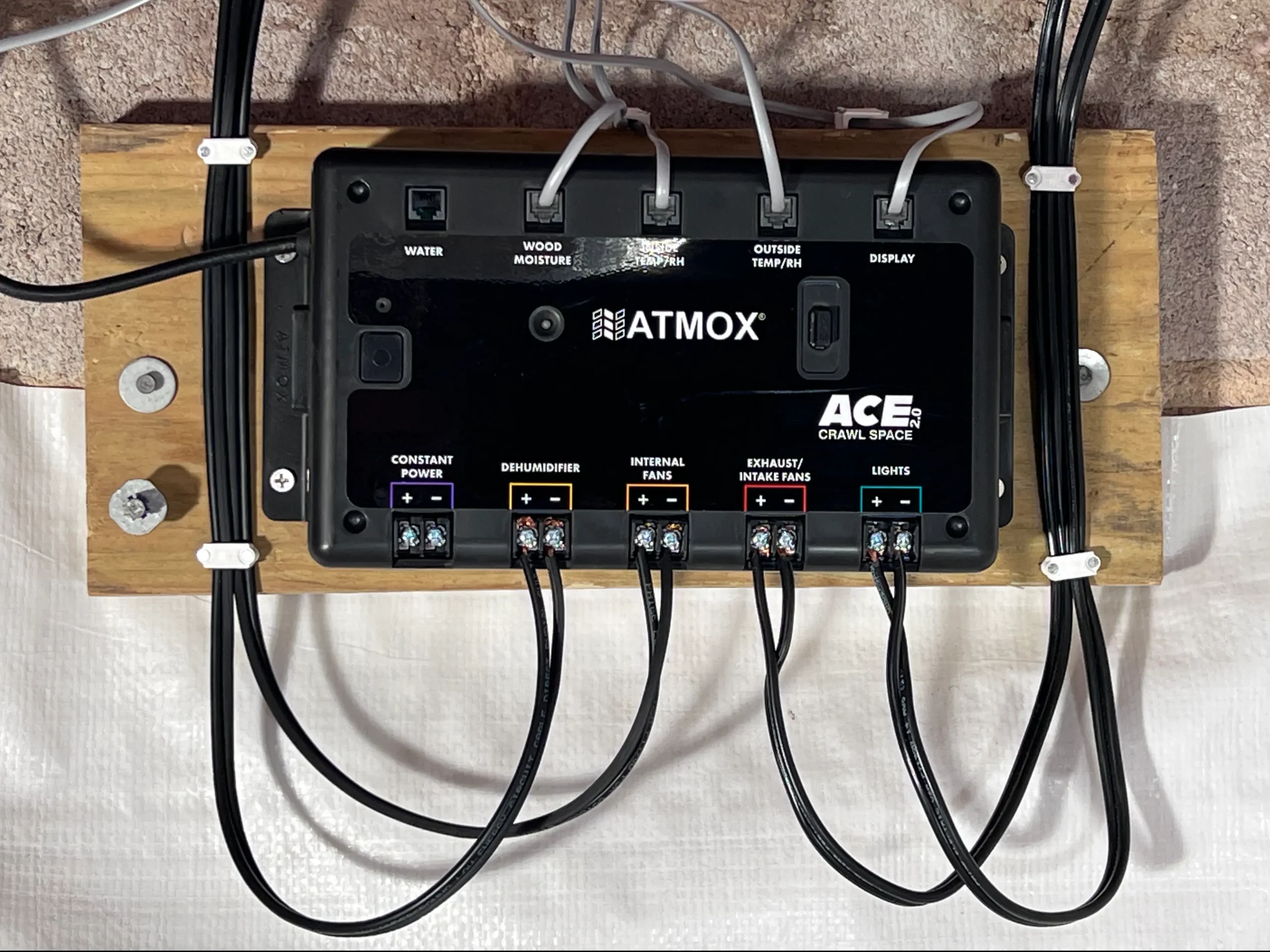
- Controller – The system evaluates those conditions and determines whether outside air should be introduced or restricted. It then determines the correct drying operation of the system.
- Intelligent Ventilation – When outside conditions support drying, ventilation fans can introduce beneficial outside air. When conditions are unfavorable, ventilation remains off and the crawl space stays closed.
- Circulation – Internal circulation fans move air through the crawl space to reduce stagnant areas and improve the distribution of drying conditions. They should be able to work to extend the reach of a dehumidifier, provide air movement with intake and exhaust fans and also run independently to even conditions throughout a crawl space even when a drying method is not in operation.
- Dehumidification – When outside air is not beneficial, dehumidification can provide additional moisture removal as needed with assistance of internal circulation fans.
Each component performs a different function, but together they create a moisture-control strategy that responds to changing crawl space conditions.
How Intelligent Ventilation Brings the System Together
Intelligent, also sometimes referred to as controlled, ventilation treats the crawl space as a managed environment rather than a permanently open or permanently sealed space.
The strategy involves:
- containing uncontrolled air entry
- monitoring indoor and outdoor conditions
- allowing ventilation when outside air supports drying
- preventing outside air from entering when conditions would add moisture
- using dehumidification when needed during unfavorable outdoor conditions
- circulating air throughout the crawl space to reach stagnant areas
Intelligent ventilation allows the crawl space to respond to changing conditions using measured environmental information rather than relying on a fixed ventilation rule.
Frequently Asked Questions
Is crawl space ventilation good or bad?
It can be either. Outside air can reduce moisture when conditions support drying, but it can increase crawl space moisture when the outside air contains more moisture than the crawl space can safely accommodate. The goal for a healthy home and crawl space is to have an actual air exchange. This is only possible through the use of ventilation. However, ventilation must occur when the air outside is beneficial for drying the crawl space.
What is controlled ventilation in a crawl space?
Controlled ventilation is a term often used to describe intelligent ventilation. However, controlled ventilation may refer to other methods such as temp vents which are NOT the same as intelligent ventilation. Intelligent ventilation is a moisture management approach that allows outside air into the crawl space only when measured environmental conditions indicate that the air can support drying. However, one measurement alone is not enough to determine the drying quality of the air. Do not get controlled ventilation such as a temperature vent confused with an actual intelligent moisture control system. The measurements must include a comparison of the inside and outside environment to determine the drying method used to control moisture.
Why is dew point important in a crawl space?
Dew point helps indicate the amount of moisture present in the air and the temperature at which condensation may occur. This makes it useful when determining whether outside air will support drying or add moisture.
What is the difference between controlled or intelligent ventilation and standard crawl space ventilation?
Standard ventilation allows outside air to enter without determining whether that air will improve moisture conditions. Controlled ventilation uses measured environmental conditions to determine when ventilation should occur and when the crawl space should remain closed.
What is the difference between controlled ventilation and encapsulation?
Encapsulation or containment establishes control by limiting uncontrolled outside air entry. Controlled ventilation uses that controlled environment to determine when outside air should be introduced for drying and when it should remain outside.