Understanding the impact of temperature on air’s moisture-holding capacity is a key concept in various fields, including meteorology, agriculture, HVAC systems, residential crawl spaces, attics, and daily comfort. This fundamental relationship, referred to as the air’s saturation point, has broad implications. The connection between temperature and moisture capacity highlights the significance of ventilation in maintaining low dew points in crawl spaces and attics.

Dew Point vs. Humidity
The dew point is the temperature at which air becomes saturated with moisture, leading to the formation of dew or condensation. It represents the point at which the air can no longer hold all the water vapor it contains. This causes the excess moisture to condense. On the other hand, relative humidity is a percentage that expresses the amount of moisture in the air relative to the maximum amount it could hold at a given temperature. While dew point gives a specific temperature at which condensation occurs, relative humidity provides a broader view of how close the air is to saturation. In simpler terms, dew point is the actual amount of moisture in the air, while relative humidity is a percentage indicating how close the air is to its capacity for moisture at a specific temperature.
The Relationship Between Temperature and Moisture Capacity
Air’s moisture holding capacity varies significantly with temperature. To understand this relationship, let’s take a closer look at how different temperatures impact the air’s ability to hold moisture:
Warm Temperatures
At higher temperatures, air can hold a substantial amount of moisture. As the temperature rises, such as in a hot and humid locations like the southeast, where it often reaches 95°F during the summer, the air’s moisture capacity is even higher, allowing it to contain a significant amount of moisture.
The relationship between temperature and moisture creates the humid conditions that characterize summer in this region. The warm air acts like a sponge, soaking up water vapor.
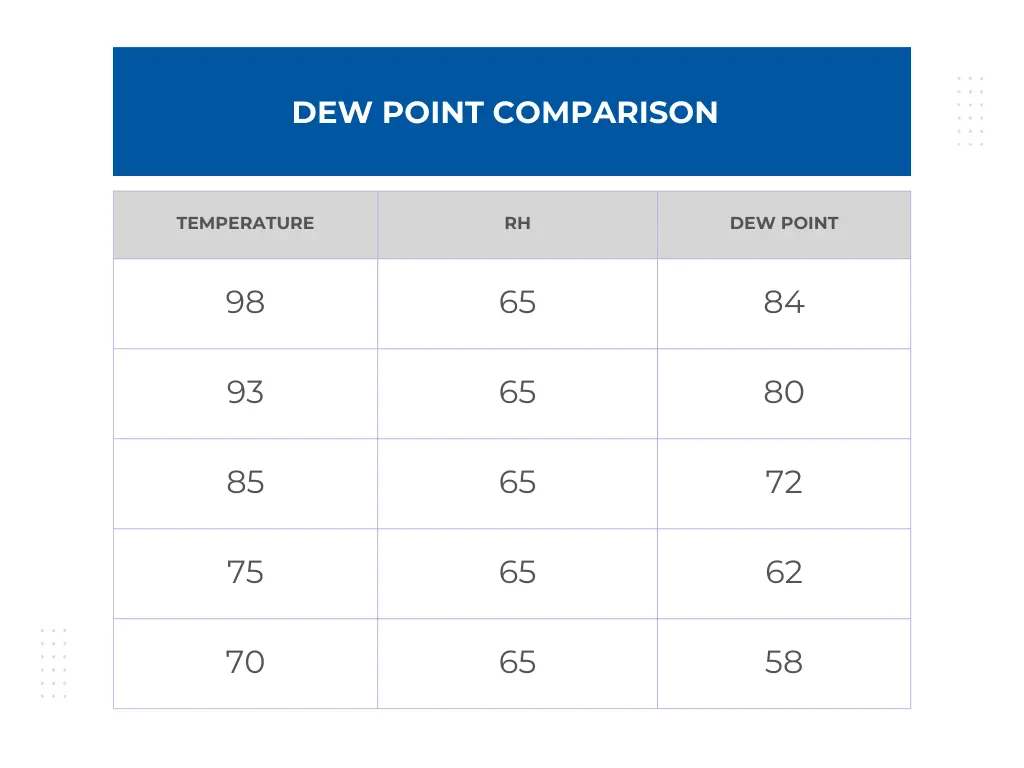
Now, consider how this relationship between temperature and moisture extends to environments like crawl spaces. In homes, especially those in humid climates, crawl spaces can become vulnerable to excess moisture. During hot summer days, when temperatures soar, the crawl space can become humid. However, here’s an intriguing twist, there are days in the summer when the dew point outside is lower than the dew point inside the crawl space.
In such cases, strategic ventilation becomes a valuable tool. Opening vents in the crawl space can allow the warmer, moist air inside to be replaced with the drier air from outdoors. This exchange not only helps in preventing the build up of excess moisture but also contributes to maintaining a healthier environment under the house.
Moderate Temperatures
As temperatures become more moderate in milder seasons, the air’s capacity to hold moisture undergoes a subtle yet significant shift. Unlike the sweltering heat of summer, cooler air has a lower moisture-holding capacity.
In regions with varying seasons, like the transition from summer to fall, the dew points tend to drop. Lower dew points mean that the air is less saturated with moisture. Now, consider the implications for crawl spaces in homes. During these milder days, the crawl space may have higher dew points than the outside air. This cooler air outside holds the potential to act as a natural dehumidifier.
Here’s where ventilation becomes a strategic ally. Opening vents in the crawl space during these cooler days facilitates the exchange of air, allowing the moist air inside to be replaced by the drier air from the outside. This process aids in the drying out of the crawl space, preventing the potential issues associated with excess humidity.

The Role of Ventilation in Crawl Spaces
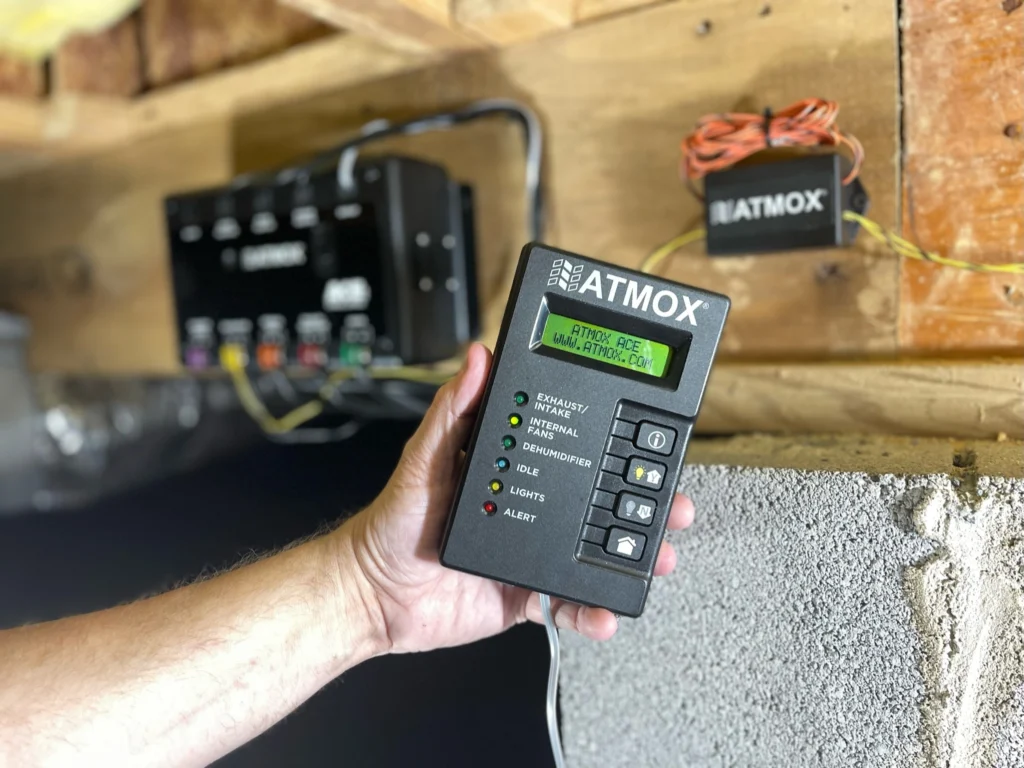
Ventilation plays a crucial role in controlling moisture levels in the critical spaces of a home such as the crawl space, especially on days with dry, lower dew points. The ATMOX system uses highly accurate sensors to determine whether outdoor air conditions are suitable for ventilation. It takes into account temperature, dew point and relative humidity from indoor and outdoor sensors to make informed decisions about when to bring in outside air into an attic or crawl space.
Why Dry, Lower Dew Point Days are Ideal for Ventilation
On days with lower dew points and drier outdoor air, ventilating the crawl space can be highly beneficial. During dry, lower dew point days, the outdoor air is often less humid than the air inside the crawl space. The ATMOX controller recognizes these favorable outdoor conditions and introduces dry, outside air into the crawl space, displacing the more humid air within.
The introduction of drier outdoor air lowers the relative humidity inside the crawl space. This helps prevent condensation, mold growth, and wood rot, ultimately preserving the structural integrity of the home while improving air quality.
Understanding the moisture-holding capacity of air at different temperatures is crucial for various applications, including maintaining crawl space health. The ATMOX System can take advantage of dry, lower dew point days to improve crawl space conditions. By bringing in drier outdoor air when the outside air is beneficial ensures a healthier home environment.