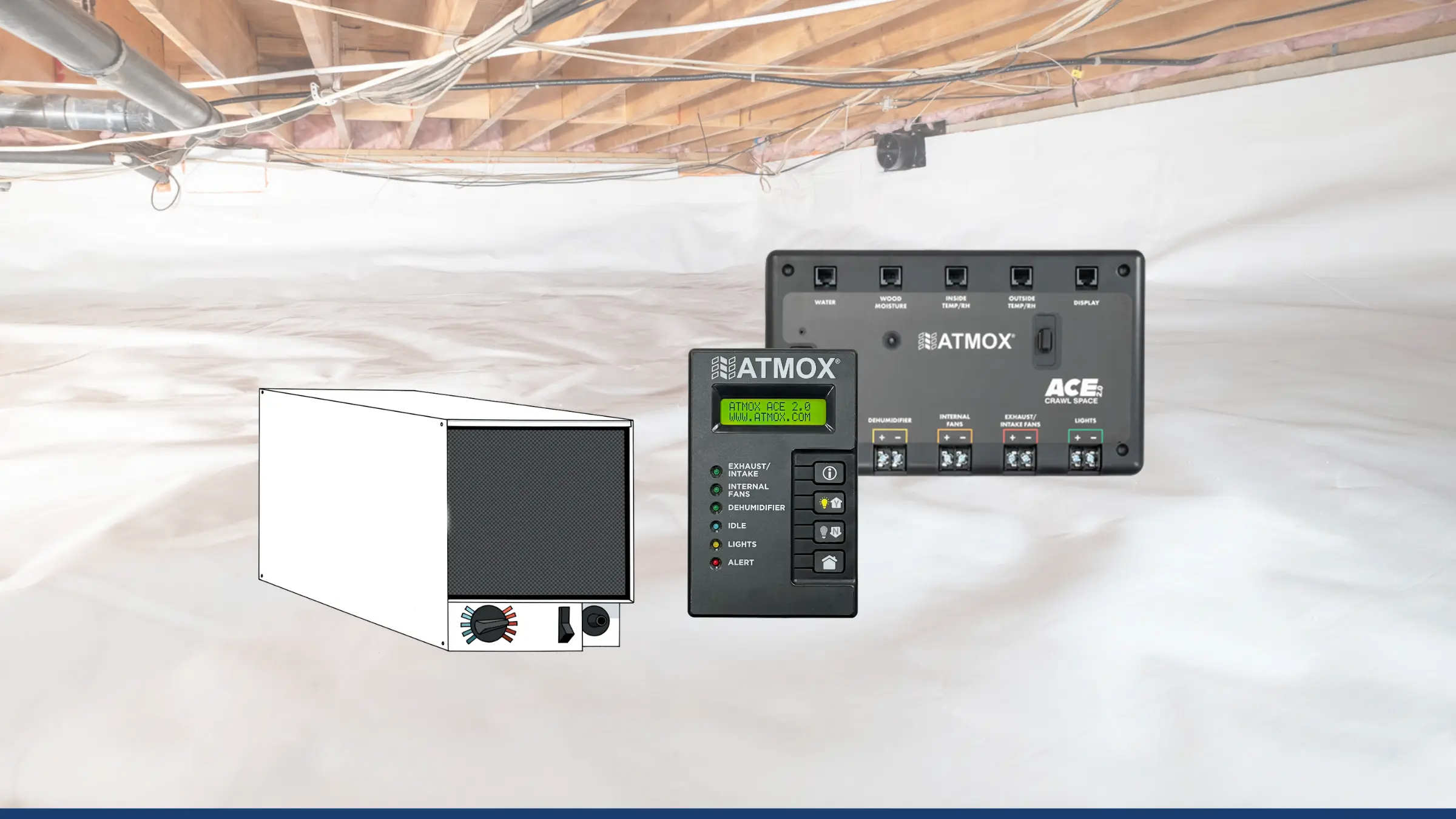
A dehumidifier can play an important role in crawl space moisture control by removing moisture from enclosed air. However, a crawl space is not usually a uniform environment. Piers, ductwork, insulation, narrow sections, elevation changes, and other obstructions can affect airflow and create areas where drying conditions are not distributed evenly.
A dehumidifier can remove moisture from the air it draws and conditions, but it does not identify moisture sources, determine when outside air could support drying, or automatically ensure that improved drying conditions reach every part of the crawl space. For these reasons, dehumidification works best as one component of a broader crawl space moisture control strategy.
What a Crawl Space Dehumidifier Does Well
A dehumidifier removes water vapor from the air passing through the unit. This can be particularly useful when outdoor air contains too much moisture to support ventilation. During these conditions, keeping the crawl space closed and using dehumidification can help maintain more stable moisture levels.
Dehumidification therefore provides an important drying function when outside air is not beneficial.
Why a Dehumidifier May Not Reach Every Part of the Crawl Space
Crawl spaces frequently contain structural and mechanical obstacles that restrict airflow.
These can include:
- foundation piers
- ductwork
- plumbing
- insulation
- narrow sections
- low-clearance areas
- changes in elevation
- separated sections of the crawl space
A dehumidifier primarily conditions the air that reaches the unit. If air is not moving effectively through distant or obstructed areas, moisture can remain longer in those sections even while conditions near the dehumidifier improve. This does not mean the dehumidifier is failing. It means moisture removal and air distribution are two separate functions.
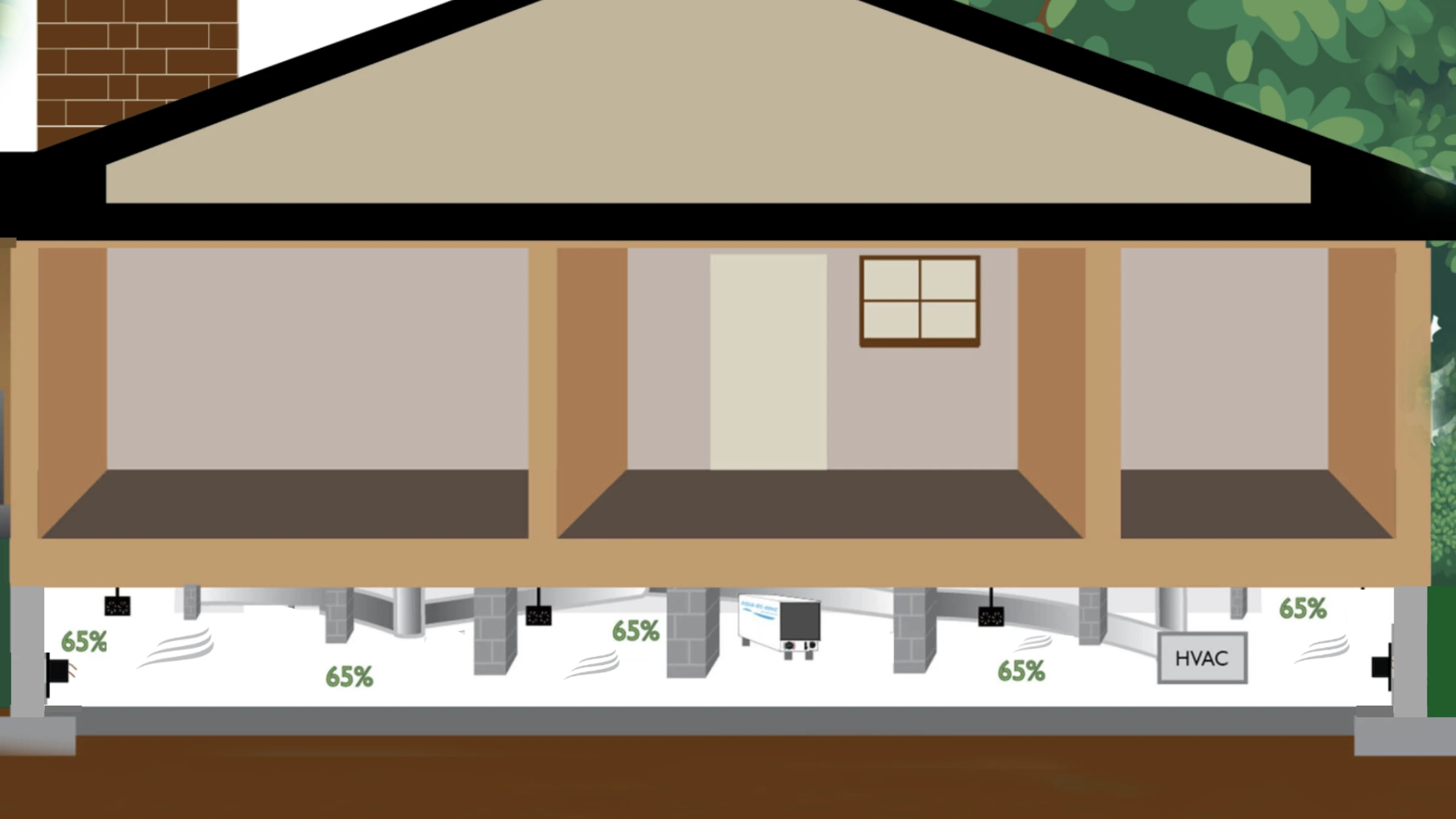
Why Air Circulation Matters
Drying a crawl space is not only about removing moisture from the air. Improved drying conditions also need to reach the full crawl space. Intentional circulation helps move air through areas where natural airflow may be limited. Circulation can help reduce stagnant pockets and distribute drying conditions more evenly around piers, ductwork, insulation, and other obstructions.
This is particularly important because temperature and moisture conditions may vary significantly from one area of the crawl space to another.
When Dehumidification Should Support the Moisture Control Strategy
Dehumidification is especially useful when outdoor conditions are not beneficial for the crawl space.
A coordinated strategy can:
- keep the crawl space closed when outside air would add moisture
- allow ventilation when measured conditions support drying
- use dehumidification when outside conditions are unfavorable
- circulate air to distribute drying conditions throughout the crawl space
Within this approach, the dehumidifier performs an important moisture removal function without being expected to perform every moisture control function by itself.
What a Dehumidifier Does Not Decide
A dehumidifier removes moisture from the air it processes, but it does not determine:
- where crawl space moisture originated
- whether outside air would improve or worsen conditions
- when outside air should be allowed into the crawl space
- when the crawl space should remain closed
- how air should be distributed through stagnant sections
- whether a bulk water problem needs to be corrected
Those decisions are part of the overall crawl space moisture control strategy.
Frequently Asked Questions
Can a dehumidifier replace crawl space ventilation?
A dehumidifier works best a part of the solution for moisture control. It has limitations and is most effective when outside air is not beneficial and when paired with internal circulation fans to help distribute airflow.can remove moisture from enclosed crawl space air, but it does not determine whether outside air could be used beneficially for drying.
Can a dehumidifier dry an entire crawl space evenly?
A dehumidifier removes moisture from the air that reaches and passes through it. Crawl spaces with limited airflow or obstructed sections benefit from additional circulation to distribute drying conditions more evenly.
Does a dehumidifier solve the source of crawl space moisture?
No. Drainage problems, plumbing leaks, ground moisture, and other sources should be addressed separately. A dehumidifier removes water vapor from the air but does not correct the source of the moisture.