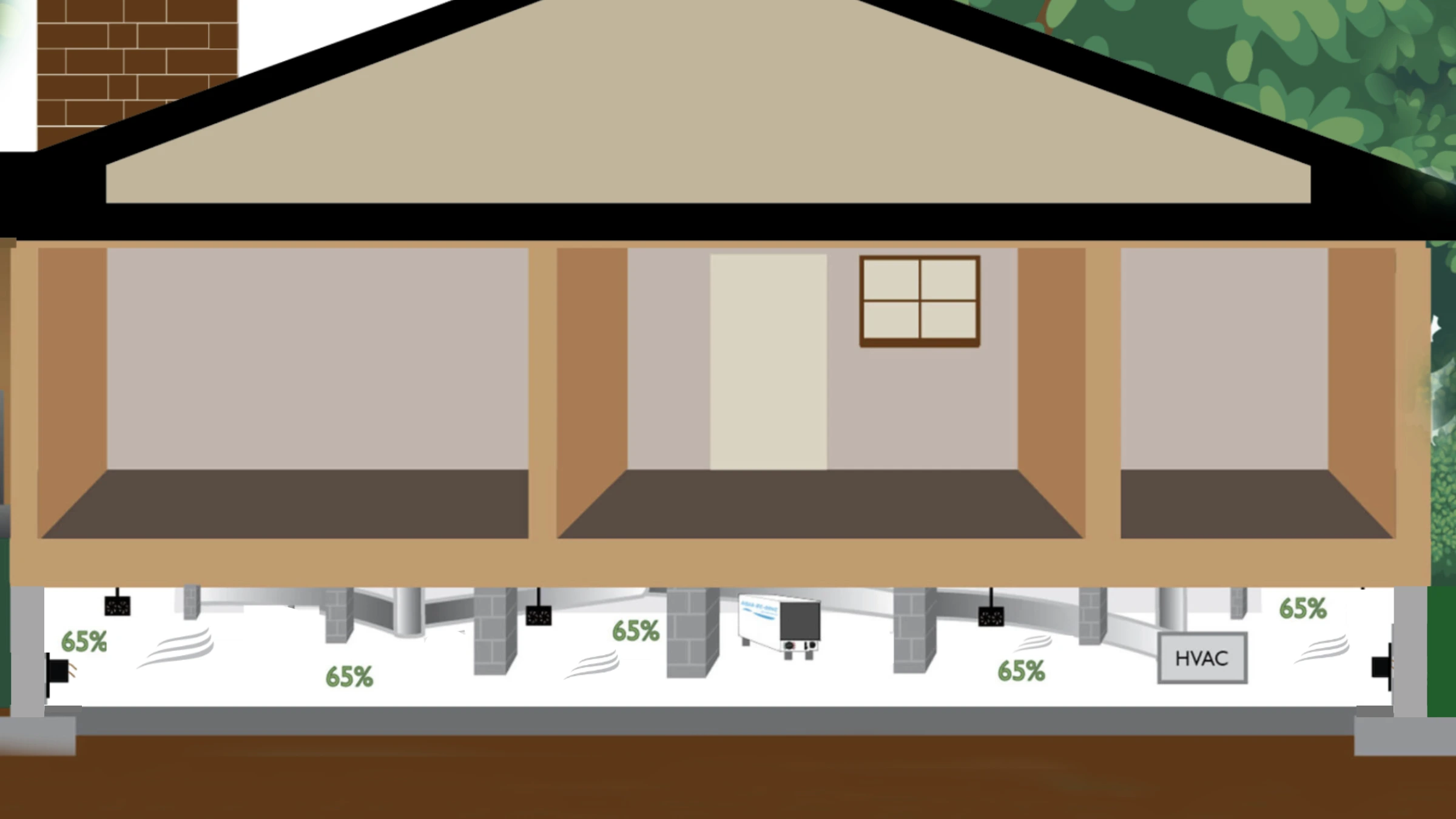
Have you noticed some areas in your crawl space remain damp and never seem to dry out, no matter what the weather is like? Maybe it’s just a corner or two that feel musty, or spots where condensation forms more often than others. These areas aren’t just an eyesore – they can lead to mold, wood rot, and unpleasant odors that eventually make their way into your home’s air. Understanding why some areas stay damp is the first step toward solving the problem. The good news is that improving airflow and circulation can make a big difference in keeping your crawl space evenly dry and healthy.
Why Certain Crawl Space Areas Stay Damp
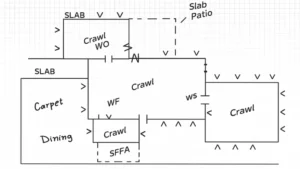
Crawl spaces come in all shapes and sizes. Some have unique layouts with nooks, crannies, or complex foundation shapes that naturally limit how air moves. These hard-to-reach areas can have higher humidity because the air doesn’t flow as freely as in the open center of the crawl space. Without air movement, moist areas can linger because stagnant air traps moisture in place.
Circulating fans are designed to solve this problem by moving air into those corners and around obstacles. When included as part of a complete moisture control system, they help make sure the drier air whether from ventilation or a dehumidifier reaches every part of the crawl space. The result is more consistent drying and a healthier environment under your home.
The Role of Airflow in Drying a Crawl Space
Air movement is critical for managing crawl space humidity. When fresh, drier air circulates through the space, it lowers overall moisture by encouraging evaporation from damp surfaces and reducing areas of high humidity. This airflow creates balance throughout the crawl space, preventing humidity from building up in corners or low spots.
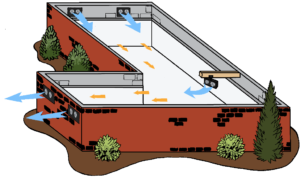
Proper airflow also helps regulate temperature. By keeping air moving throughout the crawl space, cold surfaces found in places like on ductwork are less likely to collect condensation, since the surrounding air stays closer to an even temperature. In this way, circulation not only speeds up drying but also reduces the conditions that cause surface moisture problems.
Consistent airflow ensures that no single area is overdried or neglected. Instead, every part of the crawl space benefits from the airflow creating balanced conditions. These uniform conditions within the crawl space improve long-term moisture management and support healthier air quality for the rest of the home.
Improve Crawl Space Airflow with Circulating Fans
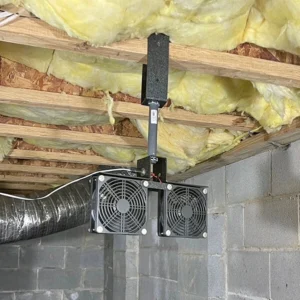
Circulating fans are a simple but powerful way to keep air moving in every part of the crawl space. These fans gently push air into corners, around piers, and through areas that natural airflow might not easily reach. By keeping the air in motion, circulation helps balance moisture levels across the space. This steady movement of air also works hand in hand with other parts of a moisture control system. When ventilation brings in outside air, circulation ensures that fresh drier air spreads throughout the crawl space. On days when bringing in outside air isn’t effective like during hot, humid weather, circulation becomes the key to maintaining balance in the crawl space. Even without ventilation, circulating fans prevent stagnant air from settling and keep conditions consistent. This movement is especially valuable when a dehumidifier is running. Instead of drying only the air closest to the unit, circulation fans spread the drier air evenly throughout the crawl space, allowing the dehumidifier to operate more efficiently. The result is more consistent humidity and temperature control across the entire area, less strain on the equipment, and energy savings over time. In both cases, circulation fans make the overall system more effective and efficient.
Putting It All Together
Keeping your crawl space dry takes more than just one approach. Ventilation brings in fresh outside air when conditions are right for drying. A dehumidifier reduces moisture when outside air is not beneficial. Circulation fans ensure that both of those solutions reach every corner of the crawl space. Together, they create a balanced system where air is moving, moisture is controlled, and the entire space stays consistently dry. Circulation is not a separate step, it’s an important part of an effective crawl space moisture control strategy. By making sure air doesn’t settle in hard-to-reach areas, circulation helps protect your home’s structure, improves overall air quality, and supports the performance of your moisture control solution.
If you’ve noticed damp crawl space areas or musty spots, it’s often a sign that air isn’t circulating as well as it could. Improving airflow helps ensure that every part of the crawl space benefits from drying. At ATMOX, we design our systems with this in mind. Our internal circulation fans work alongside ventilation and dehumidification to deliver even, effective moisture control throughout the crawl space. To learn more about how circulation fits into your complete crawl space system, contact ATMOX today.