

Moisture control is a crucial aspect of maintaining a healthy crawl space. Excessive moisture can lead to mold growth, wood rot, and even structural damage to your home. In some areas of the US, the dehumidifiers are often being used to reduce excess moisture in a crawl space, helping to maintain a dry environment. In this post, we’ll delve into how dehumidifiers work, their limitations, and how ATMOX makes your dehumidifier more effective.
How Dehumidifiers Work in a Crawl Space
Dehumidifiers are designed to reduce the humidity levels within a space. This makes them a common solution for moisture control in crawl spaces.
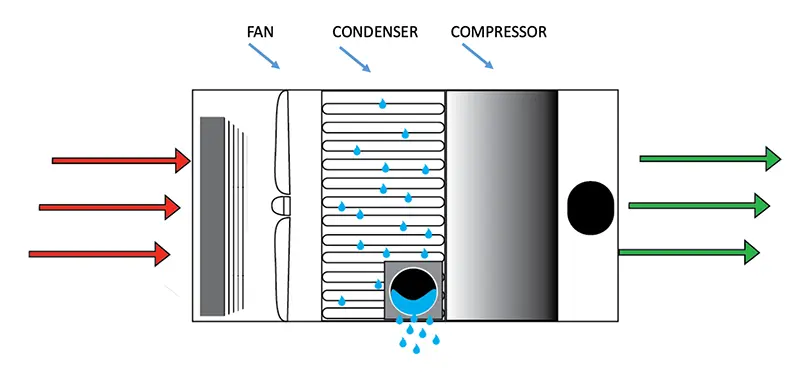
Here’s a breakdown of their operation:
- Air Intake: A fan draws in moist air from the surrounding environment into the dehumidifier.
- Cooling & Moisture Extraction: The moist air passes over a condenser coil, cooling it down. As the air cools, moisture condenses into water droplets. The water is collected and drained away through a condensate line.
- Reheated Air Release: The dehumidified air is reheated and then expelled back into the crawl space. This cycle continues until the target humidity level is reached.
Dehumidifier Limitations
The dehumidifier monitors the humidity level using an internal sensor to maintain a set target. When the desired humidity is achieved, the unit turns off until the humidity rises again.
In most installations, the dehumidifier is placed near the center of the crawl space. While this is preferred placement, it still comes with certain challenges:
- Limited Reach: The air closest to the dehumidifier dries first, and the unit continues to draw and circulate the air until it reaches the set humidity level. However, this means the further corners of the crawl space may still retain higher humidity levels.
- Uneven Drying: Since the sensor within the dehumidifier is measuring the air closest to it, the unit might shut off once this air reaches the target humidity, even though other areas may have a higher humidity level.

This uneven drying can lead to inconsistent humidity levels throughout the crawl space. Often, the target humidity is set lower on the unit to compensate, but this approach has its drawbacks. Lowering the target humidity setting on a dehumidifier might seem like a solution, but it introduces inefficiencies:
- Energy Inefficient: The dehumidifier may run longer than necessary, consuming more electricity to try to achieve a balanced moisture level across the entire crawl space.
- Over-Drying: Areas closer to the dehumidifier might become overly dry.
So, while dehumidifiers are effective, their efficiency and reach can be limited when used alone. Additionally, they also struggle in colder temperatures.
The Impact of Temperature on Dehumidifiers
Dehumidifiers are less effective in colder temperatures. Here’s why:
- Reduced Moisture Removal: As the temperature drops, the air holds less moisture. Dehumidifiers rely on drawing moisture out of the air, so in colder conditions, there’s simply less moisture available to extract.
- Strain on the Unit: If the air entering the dehumidifier is already cold, it becomes harder for the unit to cool it further to condense the moisture. This inefficiency can lead to reduced performance or even freezing of the unit’s internal coils.
Homeowners may notice that their dehumidifiers struggle during colder months, leading to higher energy bills and less effective moisture control. You can read more about dehumidifiers effectiveness in colder temperatures in our previous blog post.
How ATMOX Enhances Dehumidification
The ATMOX system addresses the challenges dehumidifiers face, particularly the issues of uneven drying, inefficiency, and performance in colder temperatures. Here’s how it elevates the use of the dehumidifier in crawl spaces:
Intelligent Operation with Temperature Control
The ATMOX controller takes temperature into account when operating the dehumidifier:
- Cold Weather Protection: By monitoring the crawl space temperatures, the ATMOX system limits the dehumidifier from running outside its operational range. This helps prevent damage to the unit and reduces unnecessary energy consumption.
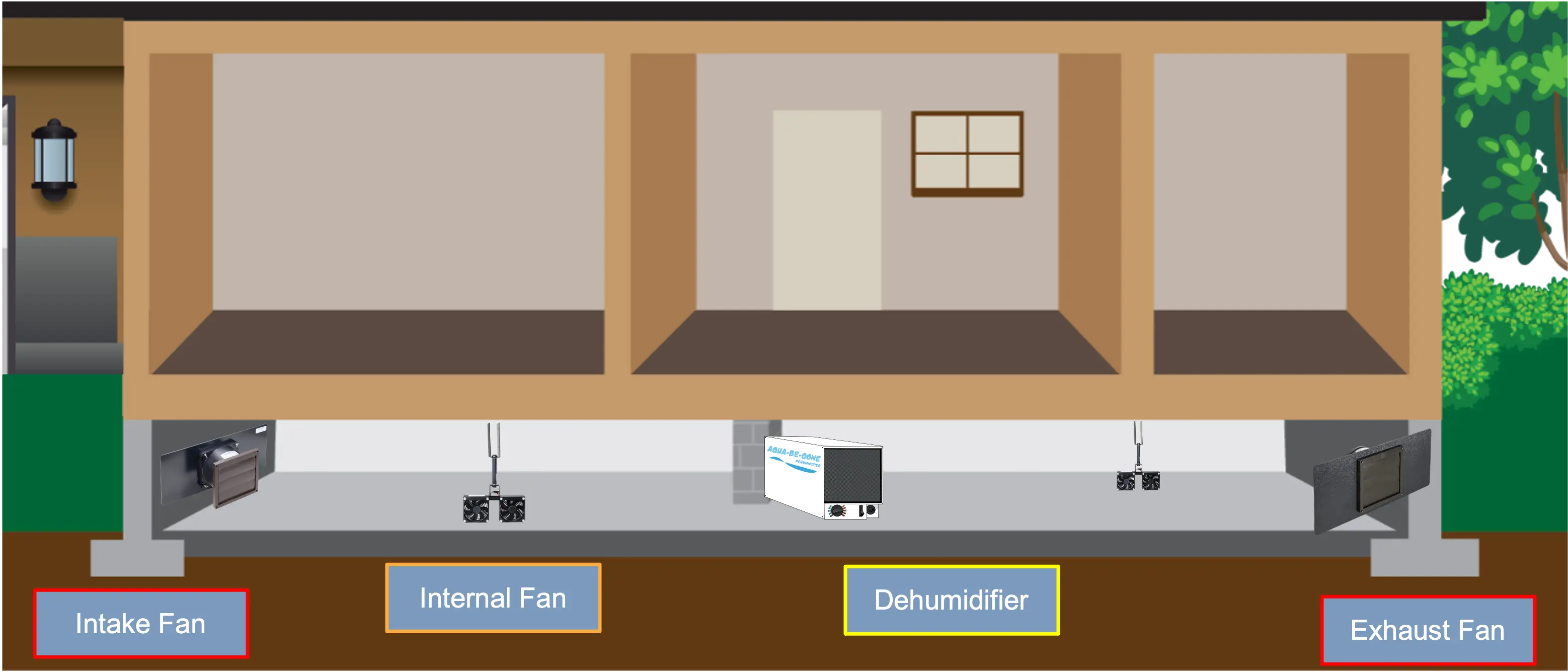
- Optimized Dehumidification: In hotter humid weather, when ventilation is not ideal, the ATMOX system ensures that the internal fans operate whenever the dehumidifier is running. This extends the drying reach of the dehumidifier by evenly distributing air throughout the crawl space. This air circulation makes the dehumidifier more effective, prevents it from overworking, and ultimately extends the equipment’s lifespan while reducing energy costs.
Utilizing Outside Air for Drying
One of the standout features of the ATMOX system is its ability to leverage outside air for moisture control:
- Monitoring the Condition of the Air: The ATMOX controller constantly monitors the humidity, temperature, and dew point both inside and outside the crawl space.
- Proper Ventilation: When the outside air is beneficial, the ATMOX system activates its ventilation fans and internal fans to bring in this air, allowing the space to dry more efficiently. This process is more energy-efficient than running the dehumidifier alone.
By combining dehumidification with proper ventilation, ATMOX achieves more effective moisture control while reducing energy costs and improving air quality.
Strategic Placement of Sensors
Unlike traditional dehumidifiers that rely on a sensor inside the unit, ATMOX uses highly accurate sensors placed away from the dehumidifier. This allows for:
- Accurate Readings: Since the sensors are placed away from the dehumidifier, the ATMOX sensors provide a more realistic measure of the overall crawl space conditions, leading to better moisture control.
- Customized Settings: There is a programmed default target humidity level but it can be adjusted by the homeowner or installer, allowing for personalized control based on the specific needs of the crawl space environment.
Enhanced Air Movement with ATMOX Fans
ATMOX systems go a step further by incorporating internal circulation fans, addressing the issue of uneven drying:
- Increased Reach: These fans help distribute air throughout the crawl space. This ensures that even the far-reaching corners receive adequate airflow to balance the moisture levels.
- Improved Efficiency: In crawl spaces with limited height or complex layouts, the addition of internal fans helps the dehumidifier operate more efficiently, reducing overall humidity levels more evenly.

The Energy Efficiency Advantage
Combining dehumidifiers with the ATMOX system doesn’t just improve moisture control and air quality—it also makes it more energy efficient:
- Reduced Energy Usage: By intelligently using outside air when beneficial, the ATMOX system minimizes the need for the dehumidifier, leading to lower energy consumption and reduced utility bills.
- Longer Equipment Lifespan: Since the dehumidifier isn’t running as frequently or in less-than-ideal conditions, its lifespan is extended, saving homeowners on maintenance and replacement costs.
Why Choose ATMOX for Crawl Space Moisture Control?
Dehumidifiers are a great solution for managing crawl space moisture, but they have their limitations. By integrating the ATMOX system, you can enhance the performance of your dehumidifier. Additionally, you can reduce energy costs, and ensure that your entire crawl space stays consistently dry and healthy.
The ATMOX approach to crawl space moisture control is a game-changer. With ATMOX, you’re not just removing moisture—you’re doing it in the most effective, efficient, and intelligent way possible.
Ready to Experience the Difference?
Explore the benefits of ATMOX today and discover how this innovative system can transform your crawl space, ensuring a drier, healthier home environment for years to come.
