

The stack effect is a natural occurrence in buildings caused by the difference in indoor and outdoor air temperature and pressure. As warm air rises in your home, it creates a pressure difference, drawing in cooler air to replace it. This process leads to air movement through openings such as windows, doors, and gaps in the building envelope. In a home with an attic space, the stack effect can have significant implications.

The Science of Heat Transfer
As physics tells us, heat flows naturally from hotter objects to colder objects due to the way particles move. The particles in hotter objects move rapidly and faster than particles in a cooler object. When the hotter object’s and cooler object’s particles collide, some of the hotter object’s kinetic energy is transferred to the slower-moving particles in cooler objects. This energy transfer causes the cooler object to warm up while the hotter object cools down, until thermal equilibrium is reached. This principle explains how heat can transfer from a hot attic space into an air-conditioned living space.

During warmer months, cooler air within an air-conditioned home is pushed down while hot air can be drawn from the attic. This is known as the reverse stack effect. However, the temperature and pressure differentials are not usually as significant in the warmer months, so the effect may not be as great. However, there are several contributing factors to attic heat. Learn more about heat reduction in an attic here.
During colder months, warm air escaping from the living spaces below rises into the attic, where it can accumulate. The warm air carries moisture along with it. As this warm air reaches cold surfaces, condensation can form and lead to mold and wood rot.
Understanding and addressing the stack effect is crucial for maintaining a healthy and energy-efficient home. Several factors influence the intensity of the stack effect in homes. The factors include temperature differentials, building design, insulation levels, air leakage, and ventilation. Understanding these factors is essential for effectively managing airflow within your home.
Preventing Warm, Moist Air Infiltration
When the interior of a building or home is warmer than the exterior, the density difference between the warm indoor air and cooler outdoor air generates a pressure imbalance. This pressure differential acts as a driving force, causing the lighter, warmer air inside to rise and infiltrate the attic while denser, cooler air is drawn in from the lower levels.
In order to prevent this moist warm air from rising into your attic space, a barrier between the living space and attic space should be created. Many of your daily activities such as cooking, showering, and laundry contribute to the amount of moisture in the air in the living space. As this warm moisture rises due to the stack effect, it can leak into the attic through gaps and cracks. Therefore, a barrier between the living and attic spaces is important. This barrier reduces moisture and heat from penetrating and settling into the attic space.
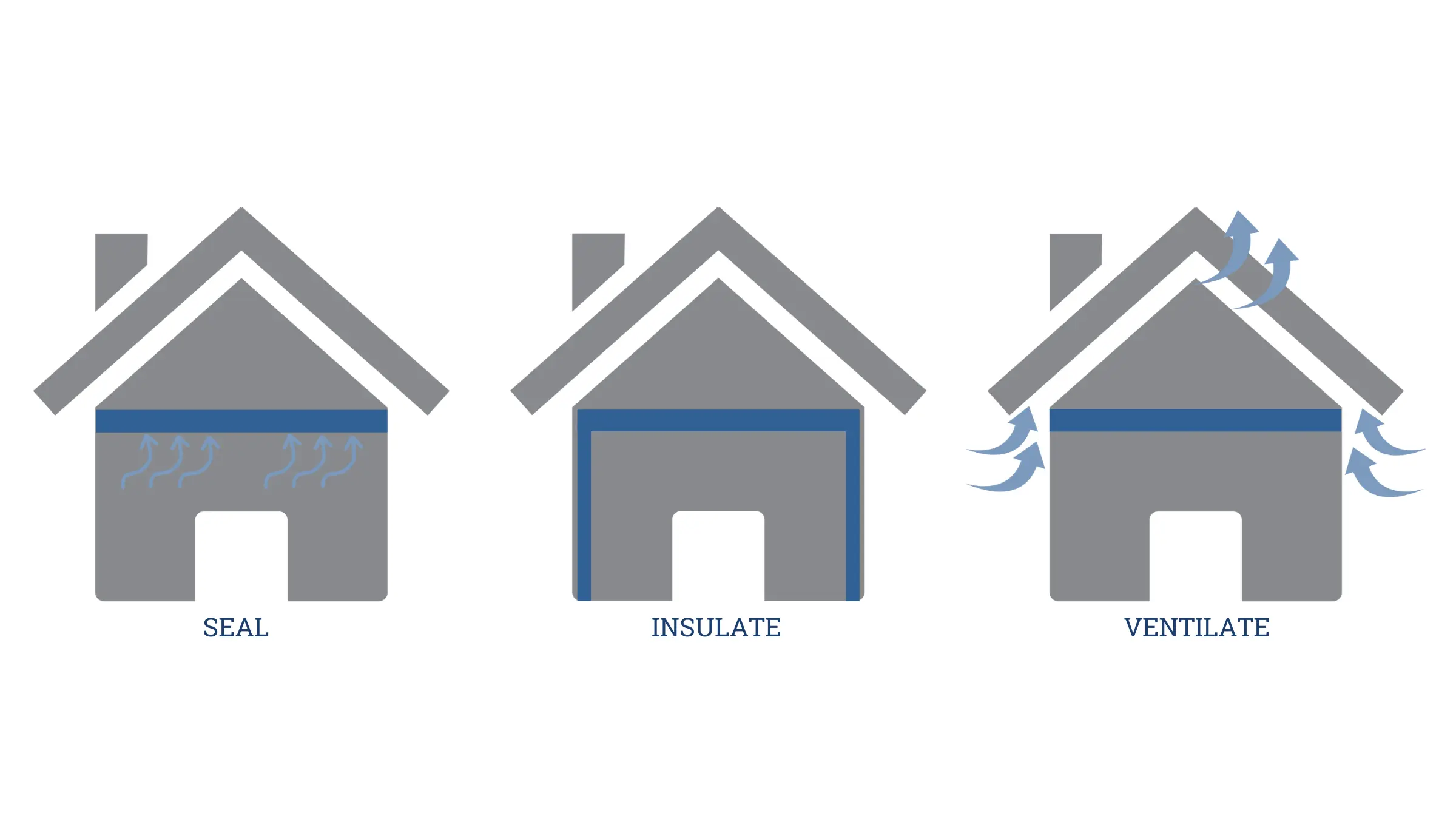
To effectively reduce warm moist air from infiltrating the attic space, homeowners should implement a three-pronged approach:
- Sealing: Properly sealing any gaps or cracks between the living and attic space can minimize air leakage.
- Insulating: Ensure proper insulation between the living space and attic space.
- Ventilation: Proper ventilation within the attic can mitigate heat and moisture issues.
The Stack Effect’s Influence in Colder Months
During the winter months, the stack effect in homes can significantly impact energy efficiency and comfort levels. Without proper insulation and sealing between the living space and the attic, warm moist air can infiltrate the attic space. This infiltration not only leads to heat loss but also sets the stage for potential moisture issues.
In winter, one of the concerns related to the stack effect is the risk of moisture in the attic. When warm air rises and reaches the attic, it can come into contact with the cooler surfaces of the attic, such as the roof deck. This temperature differential can cause the warm air to condense, leading to moisture accumulation. This moisture can create an environment conducive to mold growth. In areas with snow accumulation on the roof, this warm air on the roof deck can lead to ice dams.
To mitigate moisture issues in the attic during winter, it’s essential to ensure proper insulation, sealing, and proper ventilation of the attic space. Insulating helps prevent warm air from infiltrating into the attic and reducing the likelihood of condensation. Additionally, sealing prevents drafts and air leaks that can contribute to heat loss from the living space and moisture infiltration. Proper ventilation is also crucial in winter. The attic should actually be cold in the winter to prevent the moisture buildup and maintain a healthy attic environment.

Effects in Summer
In summer, as temperatures rise and air conditioning systems are in use, the stack effect can pose challenges for your home. Hot air can be drawn in and accumulate in the attic of the home which can hamper cooling efforts. Excessive heat in the attic can transfer to the living space. This not only diminishes comfort but also increases energy consumption. Air conditioning systems must work harder to overcome the temperature, decreasing your energy efficiency. Overworking the HVAC system may decrease the lifespan of the system. Furthermore, items housed in the attic such as mechanical components can have issues under extreme heat.
Addressing the negative impacts of the stack effect requires proper maintenance of the attic space. Proper insulation and sealing are essential to minimize heat loss in winter and prevent heat gain in summer. Additionally, proper ventilation can help reduce excessive temperatures and reduce moisture buildup. By understanding and addressing the stack effect, homeowners can improve energy efficiency, enhance comfort, and maintain a healthier indoor environment year-round.


Ensuring a Comfortable, Efficient Home
The stack effect is a powerful force that can significantly affect energy efficiency, structural integrity and overall comfort within your home. By understanding its mechanisms and taking proactive measures, you can create a healthier, more enjoyable living environment year-round. Proper insulation, sealing air leaks, and implementing effective ventilation strategies are crucial steps in mitigating the stack effect’s adverse consequences. With these measures in place, you can prevent excessive moisture buildup, reduce energy costs associated with heating and cooling, and maintain a consistent, comfortable temperature throughout your home. Prioritize ventilation and insulation to harness the benefits of a well-balanced indoor environment, safeguarding your family’s well-being and protecting your investment in your home.

