In last month’s blog, you learned just how essential proper ventilation is to maintaining a home environment that’s both comfortable and healthy. You explored the concept of good air quality in the home and saw how stale air, excess moisture, and lingering pollutants can spell trouble for you and your family. You also discovered the key benefits that come from simply allowing fresh, clean air into your home: improved indoor air quality, better temperature regulation, and a lower risk of mold or mildew.
If ventilation is so critical for the rest of your home, why should your crawl space be any different? The truth is, it’s not—and in many ways, your crawl space is even more susceptible to problems caused by poor airflow and ventilation. This blog dives deeper into the crawl space, revealing why it’s essential for you to get the ventilation right below your floors and how you can improve your air quality.
Why Ventilation Matters
- Fresh Air is Essential: Stagnant, humid air in a crawl space not only promotes mold and bacteria growth but also allows contaminants like VOCs from off-gassing materials to accumulate, potentially leading to respiratory issues if not properly ventilated.
- Comfort and Efficiency: Proper crawl space ventilation helps manage moisture levels, which can protect your home’s insulation and structural integrity.
- Healthier Living Environment: You, your family, and your pets benefit when the air you breathe is free from excessive moisture, allergens, and airborne contaminants.

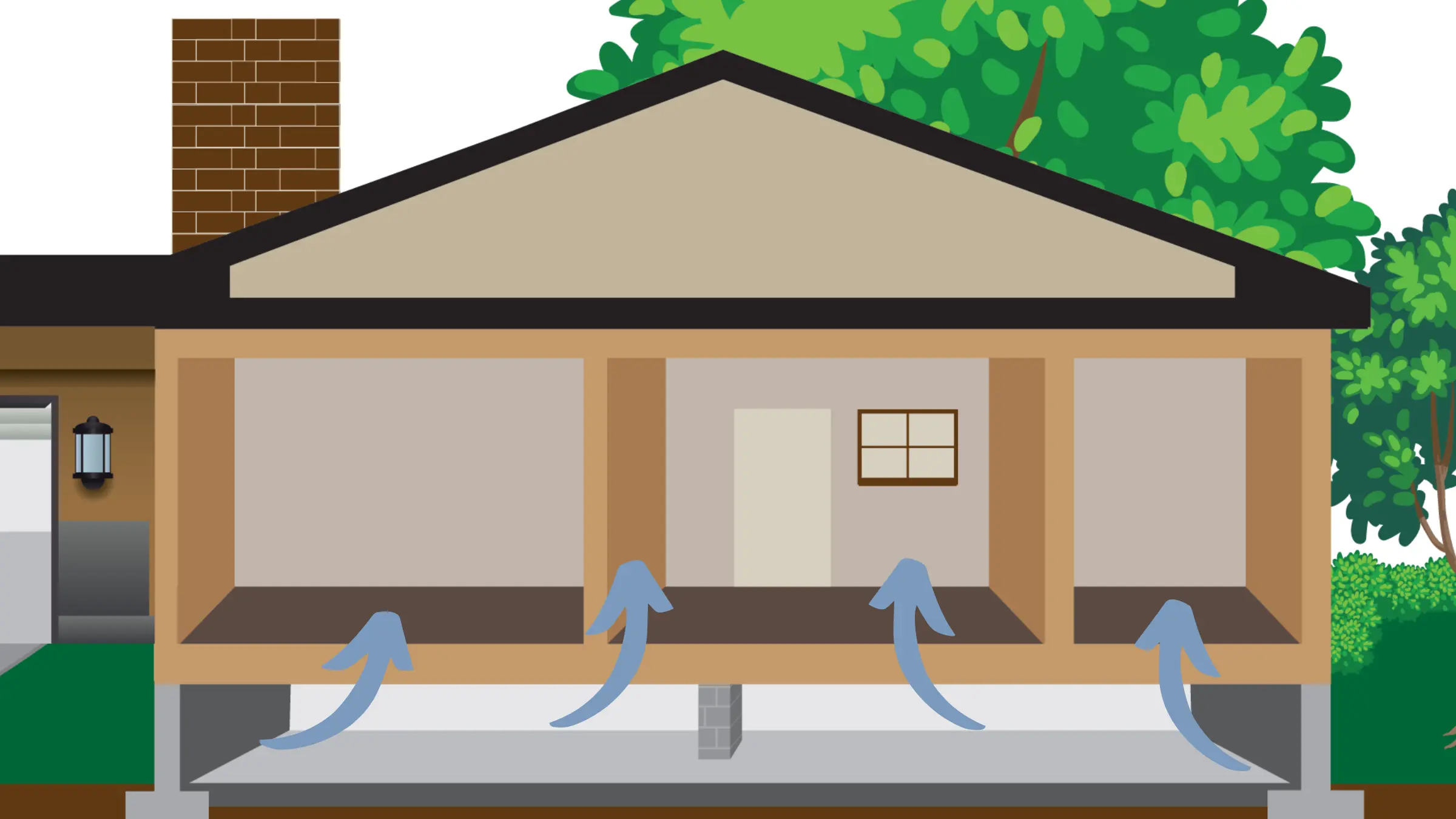
These principles apply across your entire home. While you may focus on ventilation in your living room, kitchen, and bathrooms, the crawl space is one area that often goes overlooked. Your home’s air doesn’t stay neatly separated by room or floor. Air from your crawl space can migrate into your living areas, bringing along any humidity, odors, or contaminants that exist below.
The Unique Environment Below Your Floorboards
Your crawl space might seem like an unimportant afterthought—often unfinished, dark, and rarely visited. However, that doesn’t make it any less influential on your home’s indoor air quality. Here’s why:
- Stack Effect: As you learned before, warm air rises in a home, pulling in air from lower areas. Your crawl space is one of those lower areas. If that crawl space air is damp, stale, or contaminated, it can seep into the living space. The extent of air infiltration from the crawl space varies depending on factors like the home’s construction, ventilation, and any barriers between the crawl space and living areas.
- High Moisture Intrusion Risk: Crawl spaces are closer to soil and groundwater sources. Cracks in foundation walls, or even minor leaks, can allow water vapor to accumulate, raising humidity to concerning levels.
- Reduced Sunlight and Airflow: Because these spaces are dark and enclosed, moisture lingers much longer, creating a prime environment for mold, mildew, and pests.

The Role of Radon in Crawl Space Air Quality
Radon is a naturally occurring, colorless, and odorless radioactive gas that originates from the decay of uranium in soil, rock, and water. It can infiltrate homes through cracks and openings in foundations, accumulating to levels that pose significant health risks. Given its undetectable nature without specialized testing, it’s crucial for homeowners to assess and, if necessary, mitigate radon levels to ensure a safe living environment.
Effective radon mitigation relies heavily on proper ventilation to ensure that radon gas is safely expelled from your home. This is a very specific type of ventilation mitigation system. The U.S. Environmental Protection Agency (EPA) recommends active soil depressurization systems to draw radon from beneath the house and vent it to the outside, where it is quickly diluted. These methods involve both sealing and active ventilation.
The Role of VOCs in Crawl Space Air Quality
Volatile Organic Compounds (VOCs) and other contaminants are an often-overlooked factor when it comes to crawl space air quality, yet they can have a significant impact on the health and comfort of a home. VOCs are gases emitted by certain materials, such as construction adhesives, treated wood, paints, some insulation and household chemicals. In a crawl space, these compounds can accumulate due to the enclosed nature of the area and the presence of materials that may off-gas over time.
When contaminants such as VOCs build up in a crawl space, the problem doesn’t remain contained below the floor. As the stack effect pulls air upward into the living areas, VOCs can seep into the home, contributing to poor indoor air quality. Some estimates suggest that a significant portion of indoor air can originate from the crawl space, though the exact percentage can differ based on specific conditions of the home. Exposure to VOCs and other contaminants can lead to symptoms such as headaches, dizziness, nausea, or irritation of the eyes and throat. Long-term exposure to certain VOCs may even pose more serious health risks.
By introducing fresh air and exhausting stale, contaminated air, a properly ventilated crawl space helps dilute and remove contaminants from your home.
Is Dry Air Good Air?
Dry air alone does not equate to clean or good air, especially in enclosed spaces like crawl spaces. While reducing moisture is a critical step in maintaining the structural health of your home and preventing mold growth, it’s only part of the equation for improving air quality. High humidity can lead to many issues negatively affecting air quality. A dehumidifier is often a powerful tool to keep those humidity levels in check. However, contaminants such as volatile organic compounds (VOCs), radon, and other pollutants can linger in the air, even when the humidity is under control.
Imagine closing up a room in your home, placing a dehumidifier inside, and expecting the air to be fresh and healthy. Without ventilation, the air in that room would likely become stale, possibly develop unpleasant odors, and still harbor pollutants. Similarly, consider how we instinctively react to stale air in a car on a hot day—we immediately roll down the windows to bring in fresh air. This common-sense approach underscores the importance of ventilation in creating good air.
True air quality comes from a balance of proper moisture control, pollutant removal, and adequate ventilation. In a crawl space, this means ensuring that stale, potentially contaminated air is replaced with fresh air to create a healthier environment for your home and your family.
Intelligent Crawl Space Ventilation
No two homes are alike—each has its own climate, location, and design challenges. That’s why ATMOX delivers a customized approach to crawl space care, prioritizing air quality and moisture control:

Intelligent Air Exchange: Highly accurate sensors continuously monitor conditions both inside and outside your crawl space. This real-time data ensures the system only introduces fresh, drier air when conditions are optimal, improving air quality and reducing moisture.
Precision Automation: ATMOX’s automated controls dynamically adjust to maintain a balanced environment, keeping your crawl space as dry and healthy as possible without unnecessary energy use.
Seamless Integration: System is designed to complement existing solutions like vapor barriers and dehumidifiers.
Built for Longevity: By minimizing moisture-related risks like mold, rot, and pests, ATMOX helps preserve your home’s structural integrity for the long haul.
Why It Matters: A healthier crawl space means cleaner air throughout your home. With ATMOX, you’re investing in a solution that improves indoor air quality, safeguards your family’s health, and protects your home.
Improve Your Home’s Indoor Air Quality
An ounce of prevention is worth a pound of cure. By addressing your crawl space issues now, you’ll be protecting your home against potential costly structural damage, pest problems, and air quality. Poor indoor air quality can have a serious impact on respiratory health, especially for children the elderly, and those with pre-existing conditions.
The importance of ventilation in your living areas naturally extends to one of the most overlooked parts of your home, the crawl space. The key takeaway is simple: crawl space ventilation is critical. Providing dry, fresh air below your floors creates a foundation for a healthier, more comfortable environment above them. It’s not just about protecting the structure; it’s about protecting the people who live inside it.