

Crawl space moisture can be effectively managed when the right conditions are controlled. Moisture problems typically come from three sources: ground moisture, moisture in the air, and water management issues around the home.
Because a crawl space responds to changing outdoor conditions throughout the year, effective moisture control requires more than a single solution. The space must first be brought under control by reducing ground moisture with a vapor barrier. Additionally, unused vents that allow uncontrolled outside air to enter should be closed off. From there, airflow is managed intentionally using intake, exhaust, and circulation fans that operate based on real measurements—temperature, relative humidity, and dew point—inside and outside the crawl space. Furthermore, when outdoor conditions are favorable, ventilation is used to help dry the space. When outside air is not beneficial, such as during humid summer months, a dehumidifier can be used to maintain proper moisture levels. Used together, controlled ventilation and dehumidification provide consistent, year-round moisture management, even in regions with seasonally high humidity.
Putting Moisture Control in the Right Order
Before addressing humidity or airflow inside a crawl space, it’s important to understand where moisture originates. Crawl space moisture problems are not always caused by air or humidity alone. In many cases, water is being introduced from outside the home. For moisture control strategies inside the crawl space to work effectively, exterior water sources must be addressed first.
Address Water Issues First
Reducing crawl space moisture starts with keeping water away from the foundation. Bulk water refers to rainwater or surface water that collects near the home and finds its way into the crawl space. When this type of water is present, moisture levels remain elevated regardless of passive ventilation or fan operation. The water must be addressed before addressing the moisture.
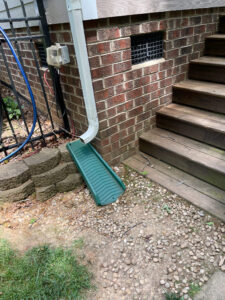
Common sources of water include downspouts directed toward the foundation, clogged gutters, grading that slopes toward the home, and poor drainage. These issues may allow water to pool near the crawl space. During heavy rainfall, these issues can allow water to migrate toward the foundation and into the space below the home.
Addressing exterior water management is a critical first step in crawl space moisture control. Extending downspouts, improving grading, and correcting drainage issues help limit the amount of water that can enter the crawl space. Once water is properly managed and is no longer entering the space, moisture introduced through the ground and air becomes the primary focus. This is where crawl space moisture control strategies inside the space can be effective.
Ground Moisture Inside the Crawl Space
Once water around the home is controlled, the next source of crawl space moisture comes from the ground itself. Even when a crawl space appears dry, moisture is constantly released from exposed soil in the form of water vapor.
A vapor barrier plays a critical role in reducing ground moisture. By covering the soil, a vapor barrier limits the amount of moisture that can evaporate into the crawl space air. Furthermore, without this barrier, moisture from the ground continually enters the crawl space. This makes it more difficult to maintain stable conditions inside the space. Managing ground moisture is about reducing the amount of moisture entering the crawl space so drying strategies can work effectively.
Managing Moisture in the Air
After water issues are addressed, moisture in the air becomes an important factor affecting crawl space conditions. Air always contains some level of moisture. As air moves in and out of the crawl space, it can either help reduce moisture or make the problem worse.
One of the most common misconceptions about crawl space moisture is relying on relative humidity alone. Relative humidity changes with temperature, which means air that appears “dry” at one temperature may actually contain enough moisture to raise moisture levels once conditions change. This is why simply opening vents or running fans without understanding air conditions can introduce moisture instead of removing it.
A more accurate way to evaluate moisture in the air is by considering temperature and dew point together with relative humidity. Dew point reflects the actual amount of moisture present in the air and helps determine whether outside air will dry the crawl space or add moisture to it. When outside air has a lower dew point than the air inside the crawl space, it can be beneficial. When it does not, introducing that air can increase moisture levels.
Coordinating Ventilation, Circulation, and Dehumidification
Because crawl spaces respond to changing outdoor conditions throughout the year, effective moisture control requires a coordinated approach—not a single solution. The space must first be brought under control by reducing ground moisture with a vapor barrier. Additionally, closing off unused vents helps prevent uncontrolled outside air from entering the crawl space. From there, airflow is managed intentionally using intake, exhaust, and circulation fans that respond to real-time measurements of temperature, relative humidity, and dew point inside and outside the crawl space.
When outdoor conditions are favorable, controlled ventilation is used to help dry the space. When outside air is not beneficial—such as during warm, humid summer months—dehumidification becomes an important tool for extracting moisture from the crawl space air. In an ATMOX-controlled system, the dehumidifier operates as part of an integrated strategy. A highly accurate humidity sensor, placed away from the dehumidifier itself, allows the system to respond to actual crawl space conditions, while coordinated internal fan operation helps distribute air evenly. By intelligently balancing ventilation, circulation, and dehumidification, this approach provides consistent, year-round moisture control without relying on a single method alone.
Frequently Asked Questions Regarding Crawl Space Moisture
- Can crawl space moisture be completely eliminated? No. Moisture is always present in the environment, including inside a crawl space. The goal is not to eliminate moisture entirely, but to manage and reduce it to safe levels by controlling water sources, ground moisture, and airflow conditions.
- Should crawl space vents be open or closed? Open crawl space vents permit uncontrolled air exchange. This often introduces moisture. Closing unused vents allows the crawl space to be managed as a controlled environment, where ventilation occurs only when conditions are favorable for drying.
- Does a vapor barrier stop crawl space moisture? A vapor barrier does not stop moisture completely. However, it significantly reduces moisture released from the ground. By limiting ground moisture, the crawl space becomes more responsive to airflow and humidity control strategies.
- What humidity level should a crawl space be kept at? Rather than focusing on a single humidity number, it is more important to consider temperature and dew point together with relative humidity. These measurements help determine whether air entering the crawl space will reduce or increase moisture.
- Can fans or dehumidifiers alone fix crawl space moisture problems? Fans and dehumidifiers can help manage crawl space moisture. However, they are most effective when used as part of an intelligent moisture control system. Airflow must be managed intentionally. When outside air conditions are favorable, controlled ventilation can be used to help dry the space. In regions with seasonally high humidity, a dehumidifier may be beneficial during periods when outside air would add moisture rather than remove it. This coordinated approach supports more consistent and effective moisture control year-round.
