

Fall is one of the best times of year for managing moisture in crawl spaces. The hot, humid days of summer are fading, and cooler, drier air is moving in. These milder “shoulder season” conditions make it the perfect time for ventilation to do its job. When outdoor air is low in humidity, it can help dry out the crawl space by reducing moisture levels, protecting structure, and improving overall air quality.
Understanding the Shoulder Season Advantage
The term shoulder season refers to the transitional months of spring and fall. These are the in-between times when outdoor temperatures are moderate and humidity levels tend to be lower.
During summer, warm air holds a lot of moisture. When that humid air enters a cooler crawl space, the moisture can condense on wood, pipes, and insulation. Over time, this trapped moisture leads to issues like musty odors, wood rot, and mold growth.
But when the weather shifts in fall, the air becomes naturally less humid and the dew point—the measure that tells us how much moisture the air can hold—drops. That means outdoor air can now help dry the crawl space. The shoulder season provides the perfect opportunity to use the fresh outdoor air to balance temperature and humidity under the home.
Why Dew Point Tells the Real Story

It’s easy to think temperature or humidity alone determine whether air is “dry” or “moist,” but dew point is the real deciding factor. The dew point represents the temperature at which air becomes fully saturated and moisture begins to condense into water droplets.
When the air outside has a lower dew point than the air inside your crawl space, it’s drier and has greater “absorbing power.” This means when that air moves into the crawl space, it can draw moisture out of damp surfaces.
Cooler temperatures limit how much moisture air can hold, and when dew points drop, the air becomes a powerful drying tool instead of relying solely on dehumidifiers or HVAC systems.
Nature’s Dehumidifier
Think of dry fall air as nature’s dehumidifier. When its drier air is brought into the crawl space, it helps remove the excess moisture. That exchange of air—swapping moist indoor air for drier outdoor air—helps balance temperature and humidity levels throughout the space.
Ventilation during this season is especially efficient because removing moisture is not dependent on a dehumidifier or an HVAC system. In some homes, conditioned air is used to help manage humidity in the crawl space, but during the shoulder season, your HVAC system runs far less—if at all. Air conditioning isn’t cycling on as frequently, and the heat has not yet begun to run. That means little to no conditioned air is moving through the space to help remove excess moisture. Without that air exchange, humidity can build up and linger, creating the potential for damp conditions under the home. Additionally, a dehumidifier uses a significant amount of energy and is less efficient in the cooler temperatures.
This is where outdoor air becomes the most effective drying tool. During the shoulder season, the outside air is naturally cooler and drier, making it ideal for ventilation systems that use this air to balance temperature, humidity, and dew point throughout the crawl space. Intake and exhaust fans work together to remove excess moisture by exchanging damp indoor air with beneficial drier outdoor air. Additionally, internal circulation fans then help move that drier air throughout the space, balancing temperature and humidity even in hard-to-reach areas.
How Intelligent Ventilation Makes the Most of the Season
A good ventilation system doesn’t just move air—it knows when to move it. This is why ATMOX is designed to measure dew point, temperature and humidity. ATMOX uses highly accurate sensors to compare inside and outside data points. When the air outside is beneficial, the system opens vents and runs fans to bring that air into the crawl space. When conditions aren’t favorable, such as on a damp day, it automatically stops fans from running to prevent adding moisture.
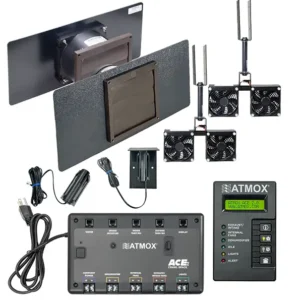 This targeted approach ensures that air exchange happens only when it benefits the space. In the fall, when outdoor air is typically drier, the system can take advantage of long stretches of ideal conditions. The result is a crawl space that dries naturally and efficiently, helping to maintain healthy humidity levels throughout the year.
Intelligent ventilation doesn’t just help manage moisture, it works hand-in-hand with other systems to create a more balanced and efficient environment. By automatically taking advantage of favorable outside air, the system allows the crawl space to dry using energy-efficient fans. This lowers overall energy use and operating costs since dehumidifiers are among the most power-intensive appliances in a crawl space. The result is a more energy-efficient, lower-cost solution that maintains consistent comfort indoors while keeping moisture in check year-round.
Effective Drying
The combination of cooler temperatures, lower humidity, and favorable dew points creates the perfect environment for crawl space drying and ventilation. By using nature’s conditions to your benefit, you can help protect your home’s structure, improve air quality—all while saving energy.
With an ATMOX system in place, homeowners don’t have to think about when or how to ventilate—the system does the work automatically. It responds to changing conditions and makes the most of every dry fall day. That’s true peace of mind, knowing your home is protected.
