

Summer heat can be relentless especially in your attic. With attic temperatures soaring up to 150°F in the summer months, your attic can quickly become a hidden threat to your home’s energy efficiency, comfort, and even structural integrity. While it might be out of sight and often out of mind, the attic plays a major role in how hard your HVAC system works and how high your utility bills climb.
ATMOX specializes in creating smarter, energy-efficient solutions for attics and crawl spaces. Attic heat affects your energy use but ATMOX can help you reduce your attic heat the intelligent way—saving energy, protecting your home, and making your living space more comfortable.
Why Attic Heat is a Problem
 Let’s start with the basics. During warmer months, the sun beats down on your roof. Without proper ventilation or insulation, your attic traps that heat like an oven. The heated air can radiate down into your home’s living space. Furthermore, this makes your air conditioner work harder and run longer to maintain a comfortable indoor temperature.
In homes without proper attic ventilation, this heat doesn’t just stay in the attic—it seeps into your living spaces. The result? Higher energy bills, decreased comfort, and added wear and tear on your HVAC system.
But the consequences of attic heat don’t stop there:
Roof Damage: Extreme attic temperatures can accelerate the breakdown of roofing materials like shingles.
HVAC Overload: Equipment stored in hot attics suffers from reduced lifespan. Furthermore, the heat that is transferred to the living space forces the system to work harder to maintain the temperature within your home.
Storage Impact: That box of keepsakes or holiday decorations? Extreme attic heat can ruin your items stored in the attic.
Three Key Principles for an Energy-Efficient Attic
If you’re serious about improving your home’s energy efficiency, the attic is the place to start. Addressing attic heat involves three main strategies: sealing, insulating, and ventilating.
- Seal – Many homes have numerous gaps and cracks between the attic and the living space. Recessed lighting, attic hatches, and plumbing penetrations are all common culprits. If left unsealed, these gaps allow hot attic air to infiltrate your home and cool conditioned air to escape. This wastes energy and money. By closing off these weak points, you create a true barrier that keeps air from leaking into the attic.
- Insulate Properly – Insulation adds a thermal barrier between the attic and the home. But even the best insulation won’t work if it’s poorly installed or compressed over time. It’s also important to make sure insulation doesn’t block soffit vents, which are essential for proper ventilation. Upgrading your attic insulation and verifying its integrity helps to slow the flow of heat into the home, reducing the burden on your HVAC system and lowering your energy usage.
- Ventilate – Here’s where many homeowners get tripped up – ventilation isn’t just about removing air, it’s about balancing intake and exhaust. Without proper intake (typically through soffits), exhaust fans may create negative pressure, unintentionally pulling conditioned air from your living space into the attic.
A well-balanced ventilation system ensures air is flowing in from the outside air and exhausting at the hottest point (near the roof peak or ridge). This continuous flow keeps attic temperatures lower, not necessarily cold but cooler.
The Intelligent Way to Ventilate
Traditional attic fans often run on timers or thermostats, kicking on regardless of whether the outside air is actually dry or cool enough to help. These fans can also draw over 400–600 watts of power each, which adds to your energy bills.
Intelligent Sensor-Based Control
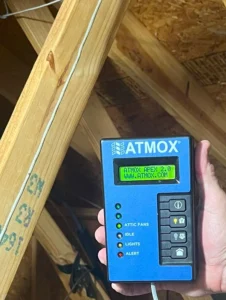 At the heart of the ATMOX system is the Controller, which uses sensors to monitor temperature and humidity both inside the attic and outside the home. Rather than running fans based on time or a single temperature trigger, the ATMOX system evaluates temperature, humidity and dew point—the true measure of whether outside air is beneficial to reduce attic moisture and heat.
When conditions are favorable, the system activates fans to bring in cooler, drier air. If the outside air is not beneficial, the fans stay off. This ensures you’re not wasting energy or pulling in hot, humid air.
Distributed Low-Voltage Fan System
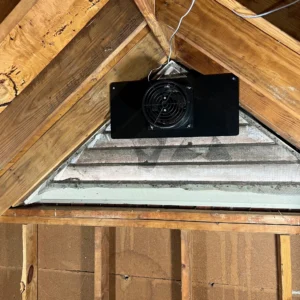
Instead of relying on one powerful fan, ATMOX uses multiple low-voltage exhaust and circulation fans strategically placed throughout the attic. This distributed airflow system reduces hot spots and ensures consistent circulation.
The Energy Efficiency Advantage
By reducing attic heat and easing the load on your air conditioning system you can save on your energy bills. Beyond the savings, lowering attic temperatures helps your roof last longer and reduces wear and tear on your HVAC unit, leading to fewer repairs and longer system lifespan.
Your Attic Efficiency Checklist
Ready to tackle attic heat in your home? Here’s a quick checklist to get started:
✅ Seal all attic-to-living space penetrations (lighting, ducts, plumbing, attic hatches).
✅ Check attic insulation for coverage, gaps, and compression.
✅ Confirm that soffit vents are not blocked by insulation.
✅ Install the ATMOX Attic Controller with temperature and humidity sensors and fans.
✅ Monitor your attic conditions.
Intelligent Ventilation Starts at the Top
Your attic may be the last place you think about when it comes to home comfort, but it has one of the biggest impacts on your energy efficiency. Reducing attic heat doesn’t just make your air conditioner’s job easier—it helps your whole home operate smarter and more affordably.
With ATMOX’s intelligent ventilation system, you can reduce your attic heat the right way, without wasting energy or risking damage to your home. It’s not just a fan—it’s an intelligent system designed for real results.
Want to learn more or schedule a consultation with an installer? Contact ATMOX today.
