
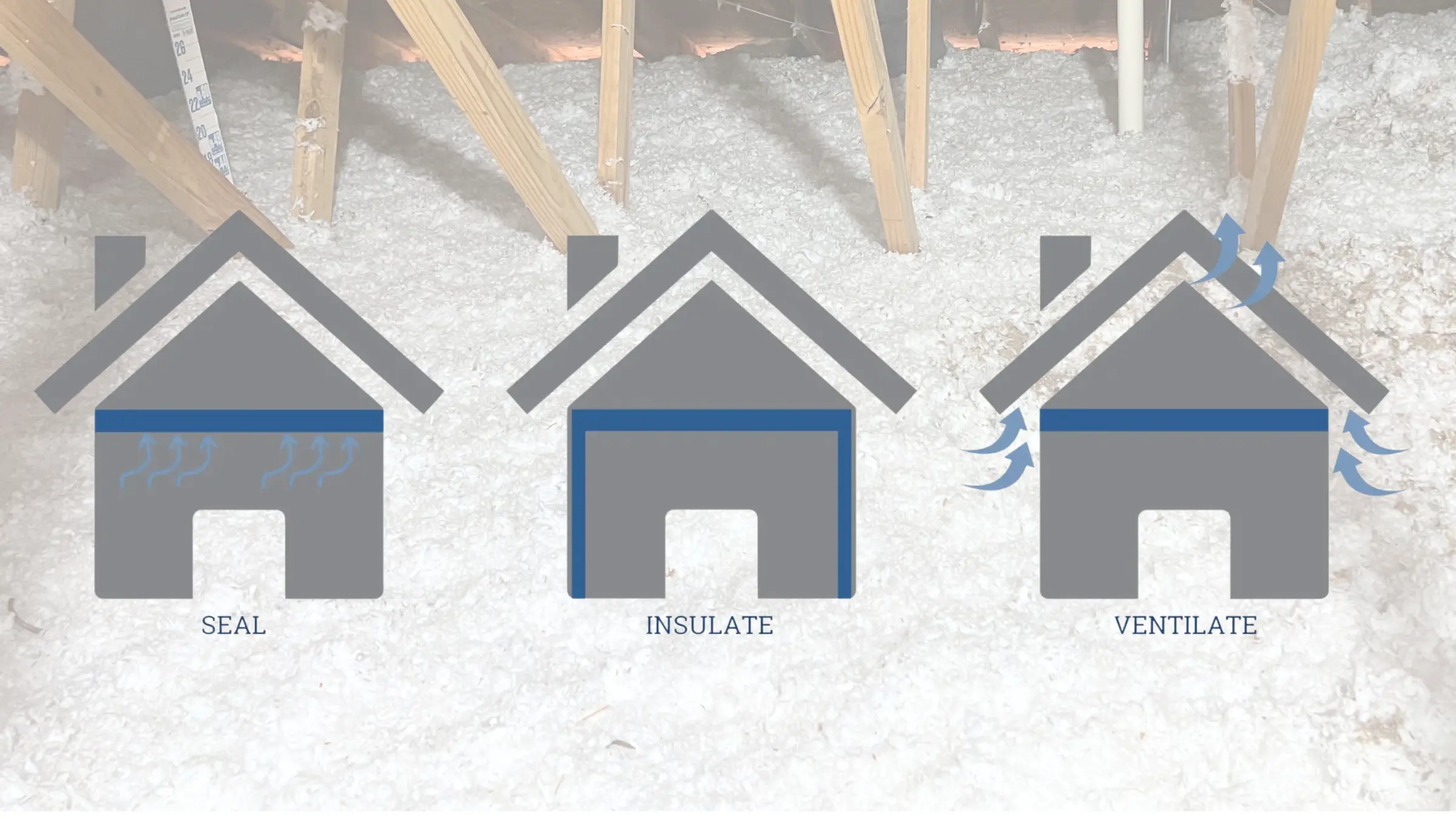
There are three improvements to your attic space that will help reduce attic heat and moisture: sealing, insulating, and ventilating. Paying a little attention to your attic can help you avoid issues that arise from excessive heat and moisture such as mold and mildew growth or damage to roof shingles. It also brings additional energy efficiency to your home.
Attic Moisture
Moisture in the attic generally starts from within the home. Many of our daily activities such as cooking, showering, and laundry all create moisture. All of that moisture rises with warm air and then seeps into the attic. Exhaust vents in bathrooms and kitchens are sometimes improperly vented and blow directly into the attic. They should be properly directed to the outside through a roof cap. This mistake in installation occurs more often than you would think! These bath and kitchen exhaust fans are highly effective at removing moisture from the living space. However, if incorrectly installed to vent to your attic, they can cause larger problems with moisture in your attic space.The most obvious problems that you want to avoid are condensation, mold, wood rot, or roof deterioration. An easy inspection can uncover these effects. There are several visible signs to look for to identify signs of moisture in the attic.

- Widespread water droplets, or if cold, frost along the ceiling of attic
- Water stains indicating condensation was present
- Signs of any wood rot or decay
- Peeling exterior paint
- Roofing deterioration
- Pests such as carpenter ants or termites
Attic Heat

In extreme cases, this heat can lead to roof shingle deterioration, especially if you have asphalt shingles. Don’t forget about any items stored in your attic. The extreme heat has the potential to ruin those items.
Addressing Heat and Moisture in the Attic
Winter Issues
A well-designed ventilated attic keeps the attic cold and the living space warm. It may seem counterintuitive, but you want your attic to be cold. If you live in an area with lots of snow on the roof for long periods of time, a warm attic can contribute to issues with ice dams. This is a very specific but potential damaging issue in cold northern climates.
In order for the attic to avoid moisture issues, you must have a barrier between the living space and the attic. Without it, the warm moist air from inside the house will drift up to the attic. Once that air hits a cold roof deck or surface, it can quickly start to condense. That condensation remaining on the surface is what leads to mold and wood rot concerns. On a really cold morning with frost or snow on the roof, it can be easy to visibly see the difference in attics. Assuming that sunlight isn’t hitting one area more than another, any parts of the roof that have melted snow or no frost are warming up from inside the attic. Any of those spots are places to start looking for a breakdown in that barrier between the living space and attic.
Summer Issues
Moisture issues are not very common in the summertime – mostly because the attic is hot – really hot. The hot air in the attic can hold a lot of moisture, so it is extremely rare to end up with condensation. So, unless you have a roof leak you probably won’t have a moisture or water problem.
However, the excessive heat creates different problems. Once again, having that barrier between the living space and attic is critically important for energy efficiency. If your air-conditioned cool air is leaking into the attic, then you are just making the HVAC work harder as the cool air escapes into the attic. You don’t want to have an air-conditioned attic. At the same time, you want to limit the heat transfer from the attic to the home to keep the room temperature more comfortable.
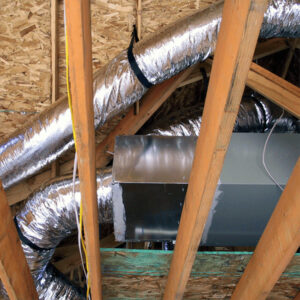
Seal, Insulate, and Ventilate
Fortunately, there are steps that you can take to help prevent issues that arise from heat and moisture in your attic. The barrier discussed above comes from properly sealing and insulating the attic away from the living space. The final step is ventilating the attic. The air exchanges keep moist air from getting trapped in the winter and reduce the temperature of the air in the attic during the summer.
How to Improve Heat and Moisture in the Attic in Three Steps
Seal

Insulate

Ventilate

Ventilation with ATMOX
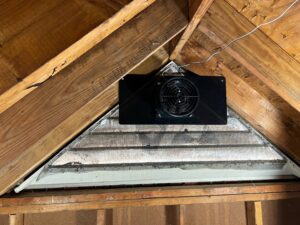
ATMOX products provide the ventilation component and arguably the most important attic improvement in reducing your heat and moisture issues. According to HGTV, “the chief cause of attic mold is poor ventilation.” The ATMOX system has a focus on reducing moisture in the attic. Unlike other attic solutions, the ATMOX controller addresses attic issues in a unique way. It uses data from dew point and temperature measurements to determine when outside air is most beneficial and only then operates fans to ventilate efficiently.
Fans exchange air more quickly than through passive ventilation alone. Fans install across the attic to create distributed and balanced airflow, which is especially important when addressing moisture in the attic. You need air movement in all areas and corners of the attic to move any trapped moist air. It is also important to have balanced airflow to not overpower your ventilation. Ventilation should be using air from the intake points and not pulling air from the living space.
