
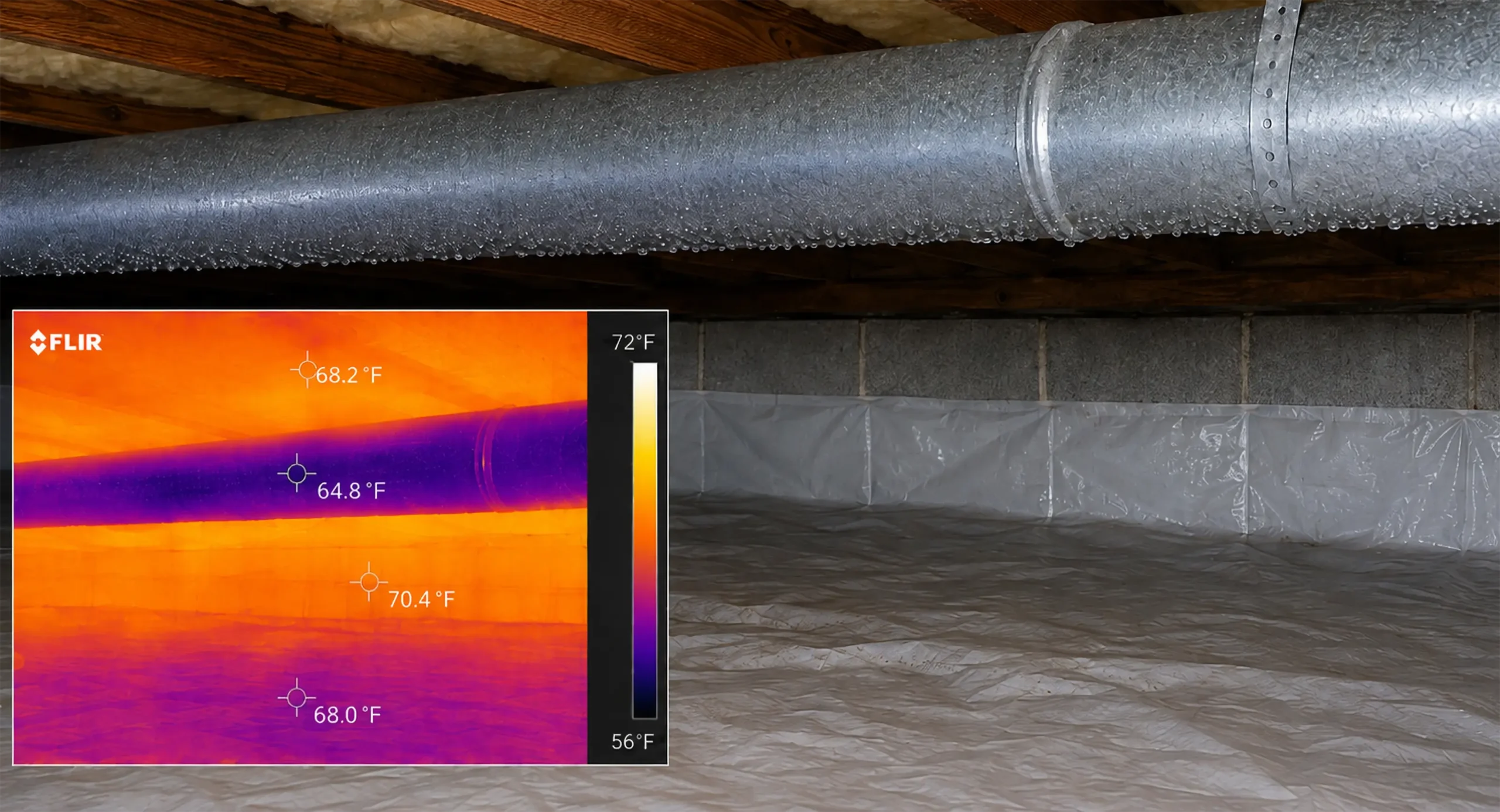
When you look inside a crawl space, some areas can appear dry while others show water droplets, damp insulation or visible condensation on ductwork and pipes. It may look like a leak. In many cases, however, the water is coming from the air itself.
A crawl space is not one uniform environment. The ground, foundation walls, HVAC ductwork, plumbing lines, doors and wood framing can all have different surface temperatures. When warm, moisture-laden air comes into contact with a surface that is cold enough, water vapor can condense into liquid water.
This is why temperature and especially dew point is so important when evaluating crawl space moisture.
Why Is the Ground Often Cooler?
Soil has significant thermal mass. Therefore, it warms and cools much more slowly than outdoor air, and the soil beneath a home is shaded from direct sunlight. During a hot summer, outdoor temperatures may climb quickly while the ground beneath the house stays comparatively cool. Building-science research has documented that crawl-space ground surfaces can remain considerably cooler than summer outdoor air. This becomes important when humid air enters the crawl space. If the dew point of that air is higher than the temperature of the ground or another cool surface, condensation can occur.
Why Do HVAC Ducts and Pipes Sweat?
When the air conditioner is operating, cool air moves through supply ducts. Even insulated ductwork can have an exterior surface cooler than the surrounding air in the crawl space.
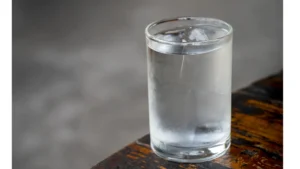
If insulation is inadequate or damaged, the duct surface can become cold enough for condensation to form. Cold piping can present a similar issue when exposed to warm, humid air. Think about a cold glass of water sitting outside on a humid summer afternoon. Water forms on the outside because the surface of the glass is below the dew point of the surrounding air. A cold HVAC duct or pipe in a humid crawl space can behave the same way.
Why Are Some Corners and Openings Cooler?
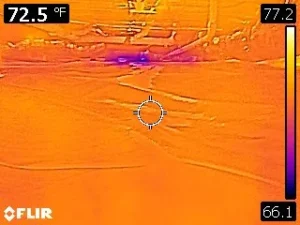
Infrared images can also reveal temperature differences around crawl space doors, foundation openings, and corners. There is not one explanation for every cooler spot. Different materials transfer heat differently, air movement through gaps can change local temperatures, shaded foundation areas may remain cooler, and moisture evaporation can cool a surface.
This is why infrared imaging is best used as part of the investigation rather than as a diagnosis by itself. The cooler area identified by the camera can then be evaluated along with humidity, dew point and moisture readings to better understand what is happening in that part of the crawl space.
Why Late Summer Can Be Difficult for Crawl Spaces
Late summer can be challenging months for crawl spaces in many parts of the US. The air may still contain significant moisture even as nighttime and morning temperatures begin to change. Air-conditioning systems are often still operating, keeping ductwork and lines cold.
Relative humidity alone does not tell the entire story. Because relative humidity changes with temperature, dew point provides an important additional measurement. Dew point is the temperature at which moisture in the air begins to condense. ATMOX uses dew point comparisons along with temperature and humidity because they help determine whether outside air has drying potential or could add moisture to the crawl space.
For example, imagine the air inside a crawl space has a dew point of 68°F, while an infrared camera shows a section of ductwork with a surface temperature of 65°F. That duct surface is below the dew point. Condensation can form even though there is no plumbing leak and no rainwater entering the crawl space. The moisture is coming from water vapor already present in the air.
Why Air Movement Matters
Foundation walls, piers, ductwork and other obstacles can restrict air movement. One area may receive good airflow while another remains stagnant, creating different temperature and humidity conditions. Circulation helps distribute air throughout the crawl space and helps drier air reach areas that might otherwise remain isolated. It can also help balance temperature differences around colder surfaces such as ductwork.
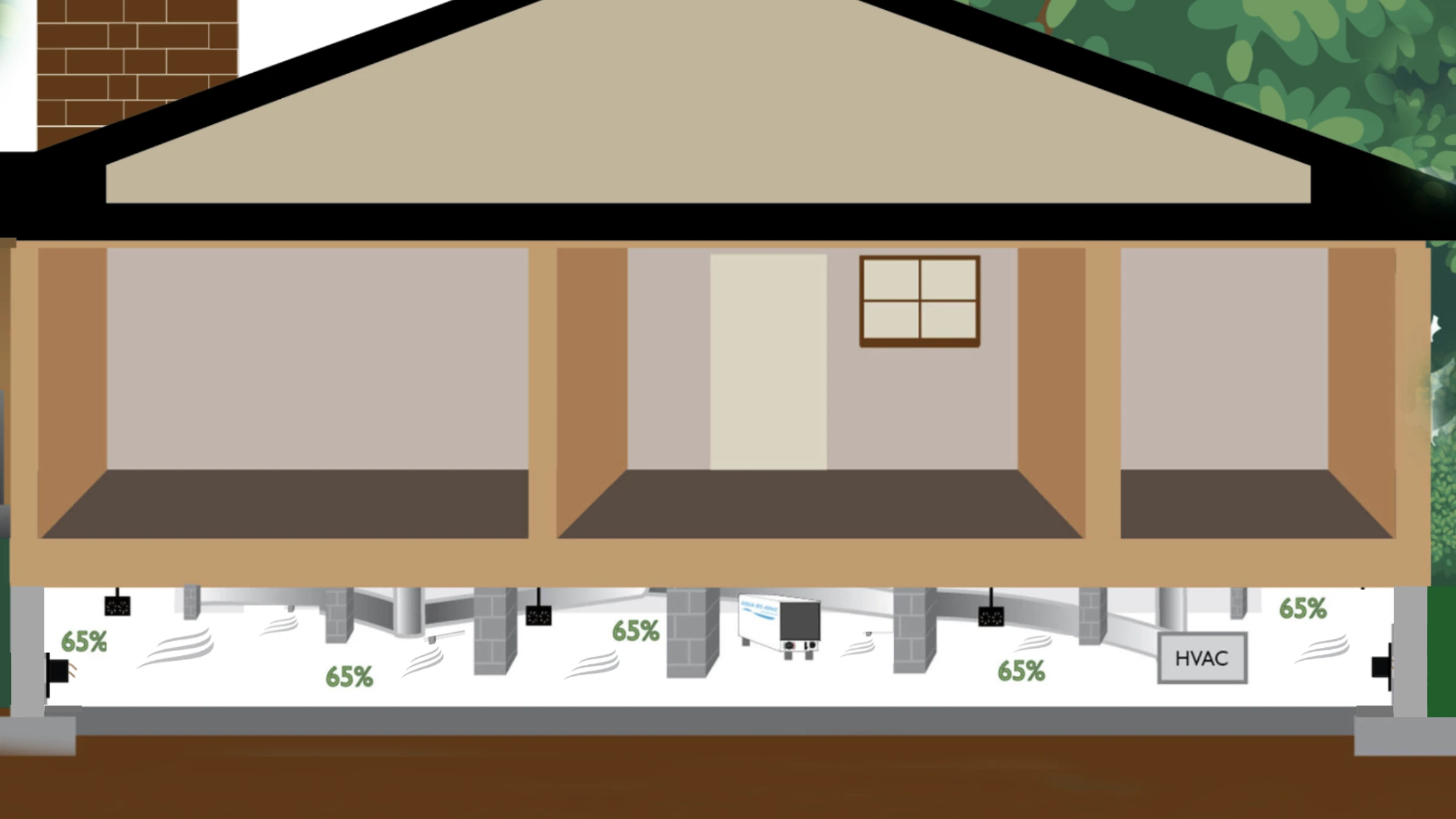
Bringing warm, moisture-laden summer air into a cooler crawl space can actually increase moisture when the outdoor dew point is too high. Air should be introduced based on whether it has the ability to help dry the crawl space.
Managing Condensation Requires More Than One Solution
If condensation is appearing in a crawl space, the first step is to understand the entire moisture picture.
Bulk water from poor drainage, plumbing leaks or HVAC condensate problems should be addressed. Ground moisture should be reduced with an appropriate vapor barrier, and uncontrolled outside-air openings should be evaluated.
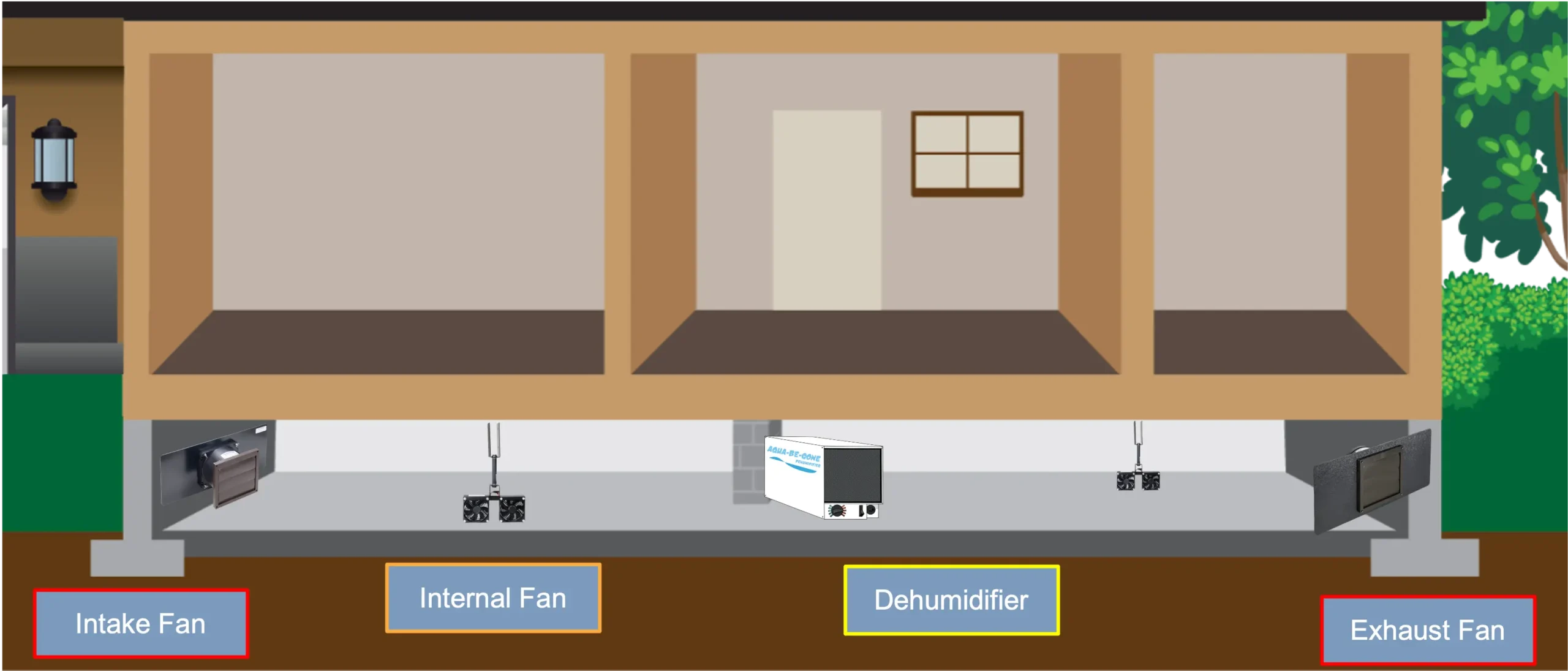
After those sources are addressed, temperature, relative humidity and dew point can help determine how the crawl space should be dried. ATMOX coordinates circulation, controlled ventilation and dehumidification rather than relying on one method alone. When outside air has greater drying potential, controlled ventilation can use that air to help reduce moisture. When outdoor conditions are not beneficial, ventilation is restricted and dehumidification can be used when needed.
What Is Your Crawl Space Telling You?
Late summer is a good time to look beneath your home. Months of heat, humidity and air-conditioning can reveal problem areas. Look for sweating ductwork, damp insulation, water droplets on pipes, moisture on the vapor barrier, darkened wood or sections that remain wetter than the rest of the crawl space.
An infrared camera adds another layer of information by showing where surfaces are cooler. Those cold areas do not automatically indicate a moisture problem, but when surface temperature, dew point and moisture readings are evaluated together, they can help explain why condensation is occurring and what needs to be addressed.
Crawl space moisture control is not simply about lowering a humidity number. It is about understanding where moisture is coming from, how temperatures vary throughout the space and when air has the drying power to improve conditions.
Seeing Condensation in Your Crawl Space?
An installer can evaluate humidity, temperatures, airflow and moisture conditions to help you determine your next steps.
