
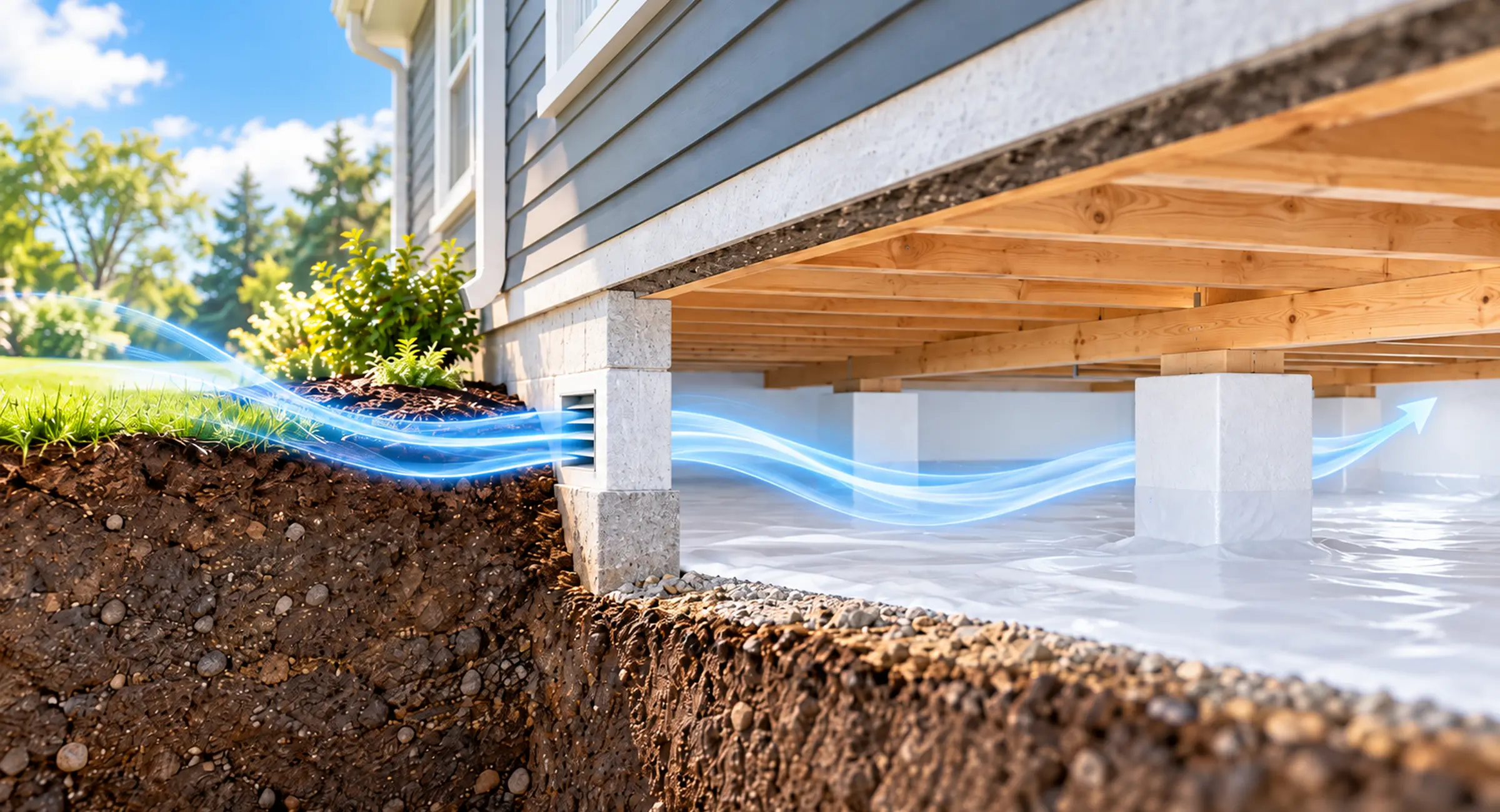
Can outside air actually help dry a crawl space? The answer is yes, but only when the conditions outside are beneficial to the conditions inside the crawl space.
Beneficial outside air is outdoor air that is dry enough, compared with the air in the crawl space, to help remove moisture when it is brought in through controlled ventilation. So, what makes outside air beneficial? It is not determined by outdoor relative humidity alone. Temperature, relative humidity and, most importantly, dew point help determine how much moisture is actually in the air and whether that outside air has the capacity to provide drying inside the crawl space.
That is why outside air is not simply “good” or “bad” for a crawl space. Conditions change with the weather, the season and even throughout the day. The important question is whether the outside air can help dry the crawl space right now.
Why Outdoor Humidity Does Not Tell the Whole Story
It is easy to look at a weather app, see an outdoor relative humidity of 70 or 80 percent and assume that air should never enter a crawl space. The problem is that relative humidity is exactly what its name suggests: relative to temperature.
Warm air can contain considerably more water vapor than cool air. As the temperature changes, the relative humidity can change even when the actual amount of moisture in the air has not changed very much. That makes relative humidity useful, but it should not be evaluated by itself when determining the drying potential of outside air.
For crawl space moisture control, dew point is another important indicator. Dew point indicates the temperature at which moisture in the air will begin to condense into liquid water. It also provides a useful way to compare how much moisture is present in two different bodies of air. If the dew point outside is lower than the dew point in the crawl space, the outside air contains less moisture and may have drying potential. If the outdoor dew point is higher, bringing that air into the crawl space could introduce additional moisture instead.
Temperature must also remain within an appropriate range. Beneficial ventilation is therefore based on the relationship between the conditions inside and outside, not a single humidity percentage.
What Does Beneficial Outside Air Look Like?
Consider a cool, dry fall day. The crawl space may be approximately 72°F with 70% relative humidity. Outside, it might be 65°F with 50% relative humidity. In this example, the approximate dew point inside the crawl space is 62°F, while the outside dew point is approximately 46°F. That outside air contains substantially less moisture. Under appropriate temperature conditions, introducing it into the crawl space can provide natural drying power.
Now consider a hot summer afternoon. The outside temperature may be 88°F with 70% relative humidity, producing a dew point of approximately 77°F. Meanwhile, the crawl space may remain around 72°F with a much lower dew point. In that situation, introducing the warm, moisture-laden outdoor air into the cooler crawl space would not provide drying. In fact, as that outdoor air cools, its relative humidity rises. If a surface in the crawl space is below the air’s dew point, condensation can form on ductwork, pipes, wood framing or other cooler surfaces. This is one reason uncontrolled crawl space ventilation can create moisture problems during warm, humid weather.
Controlled Ventilation Is Different From Open Crawl Space Vents
Traditional crawl space ventilation relied on foundation vents that remained open for long periods of time. There was no measurement of the air inside or outside and no way to determine whether the incoming air would actually help the space. The problem is not outside air itself. The problem is uncontrolled outside air.
Controlled ventilation takes a different approach. Rather than leaving the crawl space exposed to whatever conditions happen to exist outside, the air exchange occurs only when measurements indicate that outside air can improve conditions.
With ATMOX, sensors measure temperature and relative humidity both inside the crawl space and outside. The controller uses those measurements to evaluate conditions, including the dew point comparison. When outside conditions are appropriate for drying, the controller can operate intake and exhaust fans to take advantage of the drying power of outside air. When outside conditions are not beneficial, outside ventilation does not operate. The difference is control.
Why Is Outside Air Sometimes Better for Drying Than a Dehumidifier?
A dehumidifier is an important moisture control tool, particularly during periods when outdoor conditions remain warm and humid. However, a dehumidifier does not have to be the only method of drying a crawl space. There are many periods throughout the year when nature provides dry air outside. Fall, winter and spring frequently bring lower outdoor dew points, although actual conditions vary by climate and weather pattern. When that air has less moisture than the air inside the crawl space and temperatures are appropriate, controlled ventilation can use it as a drying resource.
This can reduce the amount of time a dehumidifier needs to operate while still providing active moisture reduction. When outside air is not beneficial and crawl space humidity is elevated, a dehumidifier can provide the needed drying instead. The goal is not to choose between ventilation and dehumidification. It is to use the appropriate drying method based on actual conditions.
Why a Crawl Space Needs More Than One Moisture Control Tool
Outside air is only one part of managing crawl space moisture. Before any drying strategy can work effectively, sources of unwanted water and moisture should be addressed. Rainwater, drainage problems, plumbing leaks and HVAC condensate issues can continually add water to a crawl space. Exposed soil can also release substantial moisture into the air, which is why an appropriate ground vapor barrier is an important part of crawl space moisture management.
Once those sources are controlled, the focus shifts to managing the moisture that remains in the air and building materials.
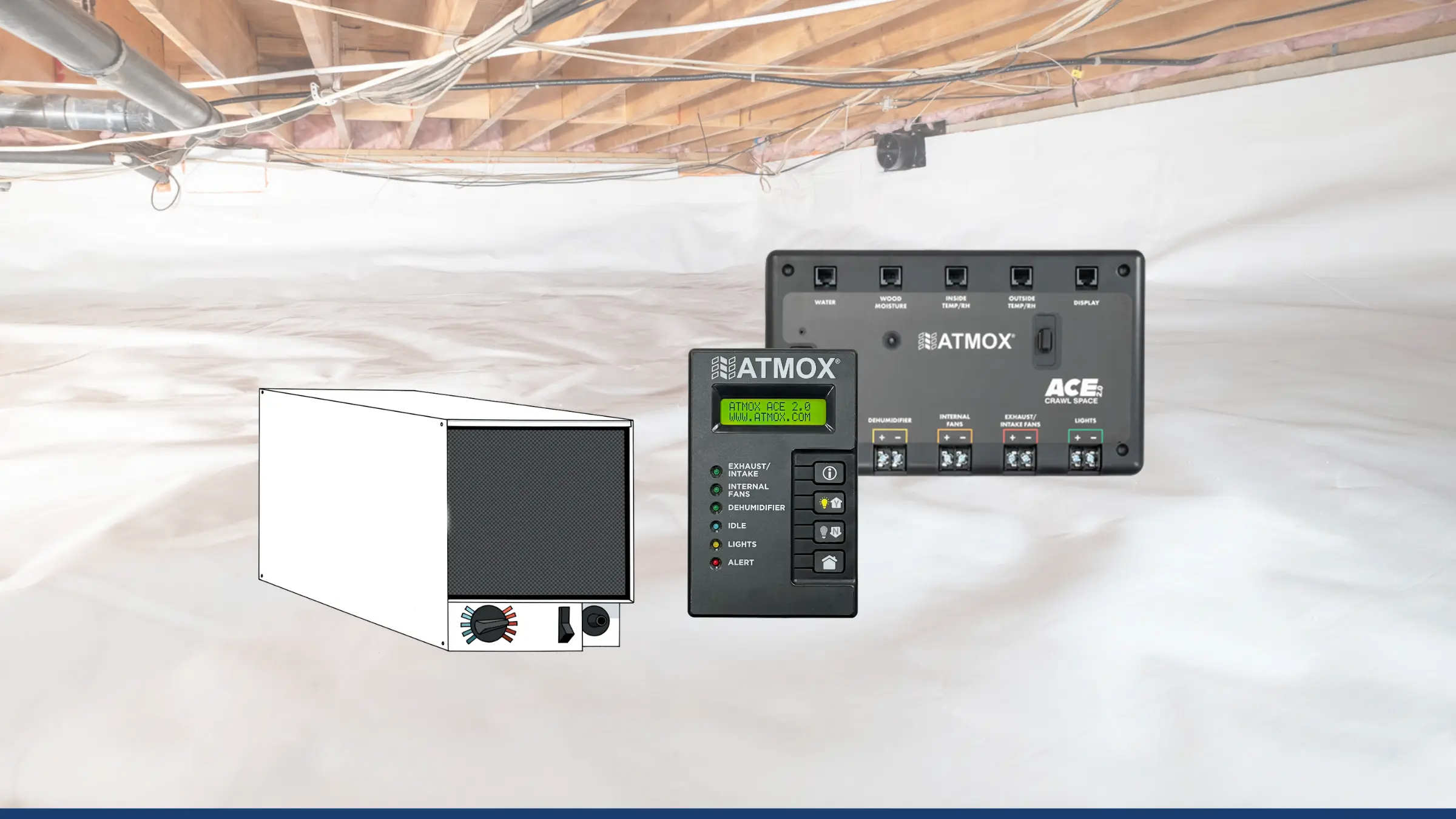
That may include:
- Controlled/Intelligent ventilation when outside air provides beneficial drying.
- Dehumidification when outside air is not beneficial and moisture levels are elevated.
- Circulation to move drier air throughout the crawl space and into areas separated by foundation walls, ductwork or unusual layouts.
- Ongoing monitoring to respond as crawl space and outdoor conditions change.
A crawl space is not a static environment. Moisture conditions change with temperature, rainfall, season, ground conditions and outdoor weather. A complete crawl space moisture control strategy needs to respond to those changes rather than relying on one component to operate the same way all year.
Does ATMOX Use Outside Air All the Time?
No. ATMOX does not simply run ventilation fans because it is a particular season or because the outdoor humidity is below a certain percentage. The ATMOX approach to crawl space moisture control uses temperature and humidity information from sensors inside and outside the crawl space to respond to changing conditions. It evaluates those conditions to determine when outside air can be used appropriately. When outside air provides drying potential and temperature conditions are within the proper operating range, the system can use ventilation.
When outside air is not beneficial, the crawl space remains protected from that air and the system can use other components, including circulation and dehumidification when needed. This allows the drying strategy to change as the conditions change.
Frequently Asked Questions About Beneficial Outside Air
Can humid outside air ever help dry a crawl space?
Possibly. Relative humidity alone does not determine whether air is beneficial. Temperature and dew point must also be considered. Outdoor air with a lower dew point than crawl space air may provide drying potential even when the relative humidity percentage initially appears high.
Should crawl space vents be left open when the weather is dry?
Not necessarily. Weather can change quickly, and “dry” based on outdoor relative humidity alone does not tell you whether the air is beneficial to the crawl space. Controlled ventilation evaluates actual inside and outside conditions before introducing outside air.
Is outside air beneficial during the summer?
There are a surprising number of optimal days when outside air is beneficial. However, in some regions there are many hot and humid summer days where the conditions frequently produce high outdoor dew points. When the outdoor air contains more moisture than the crawl space air, bringing it inside can increase moisture rather than reduce it. Conditions should be measured rather than assumed based on the season.
Can outside air replace a crawl space dehumidifier?
Controlled ventilation and dehumidification can complement one another. Outside air can provide drying when conditions are beneficial, while a dehumidifier can reduce moisture when beneficial outside air is unavailable.
Let the Conditions Determine the Drying Strategy
The question is not whether crawl spaces should always be ventilated or always be closed to outdoor air.
A better question is:
Is the outside air beneficial to this crawl space right now?
By measuring conditions inside and outside the crawl space, ATMOX can determine when outside air offers useful drying power and when the crawl space should remain closed to it. Ventilation, circulation and dehumidification can then work together as part of a moisture control strategy that responds to changing conditions.
Not Sure What Your Crawl Space Needs?
Every crawl space is different, and the right moisture-control approach depends on the conditions in your home. ATMOX is here to help you understand your options and determine the best next step for your crawl space.
Get Help With Your Crawl Space
